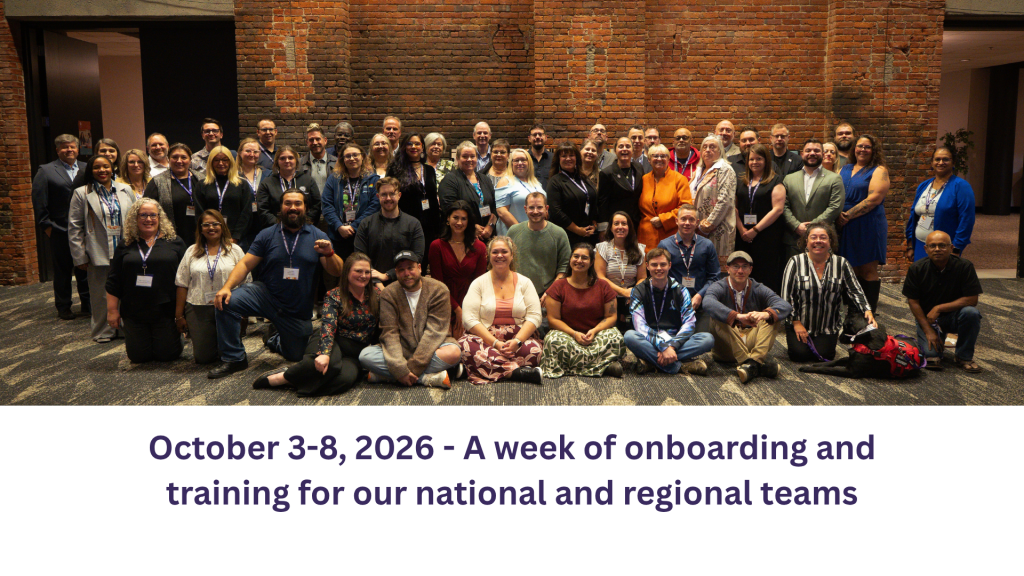
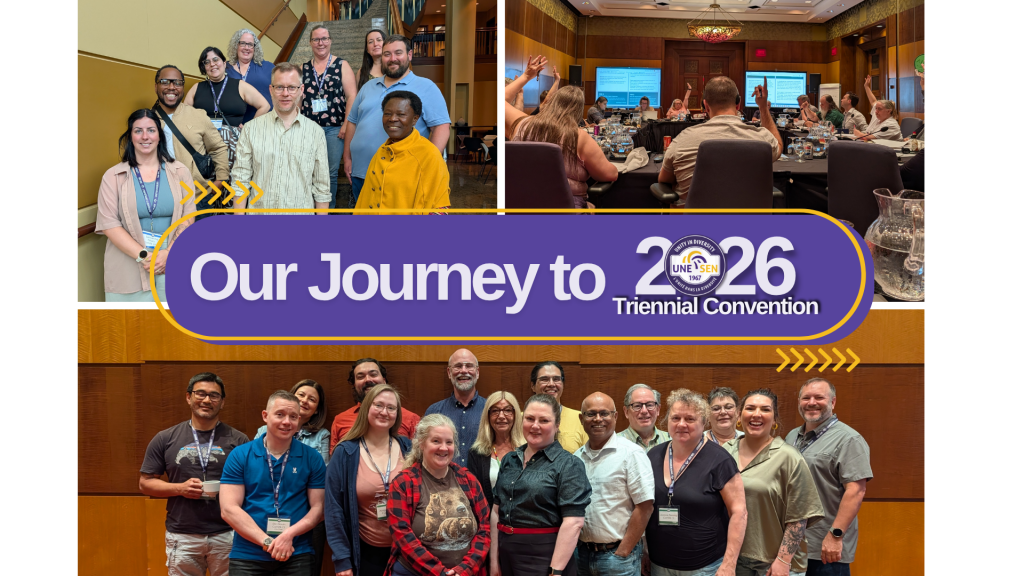
From October 3 to 9, UNE’s newly elected officers and staff gathered in Salaberry-de-Valleyfield for a full week of onboarding and training. Over the week, participants took part in sessions led by UNE staff, PSAC staff and the Joint Learning Program (JLP), which presented on health and safety. Sessions covered the roles and responsabiliites of elected officers and staff work together to serve our members. Beyond the training itself, the week was a chance to get to know one another and build strong working relationships for the term ahead and enjoy some karaoké.
Thank you to all participants and presenters for their energy and commitment.
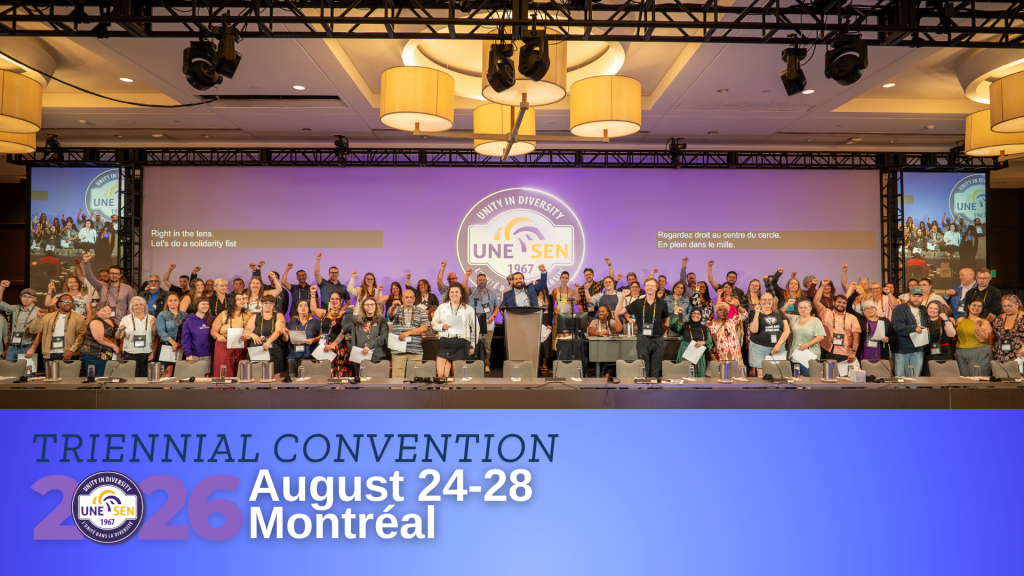
All elected members during convention in all UNE regions swearing in, on Friday August 28, 2026.
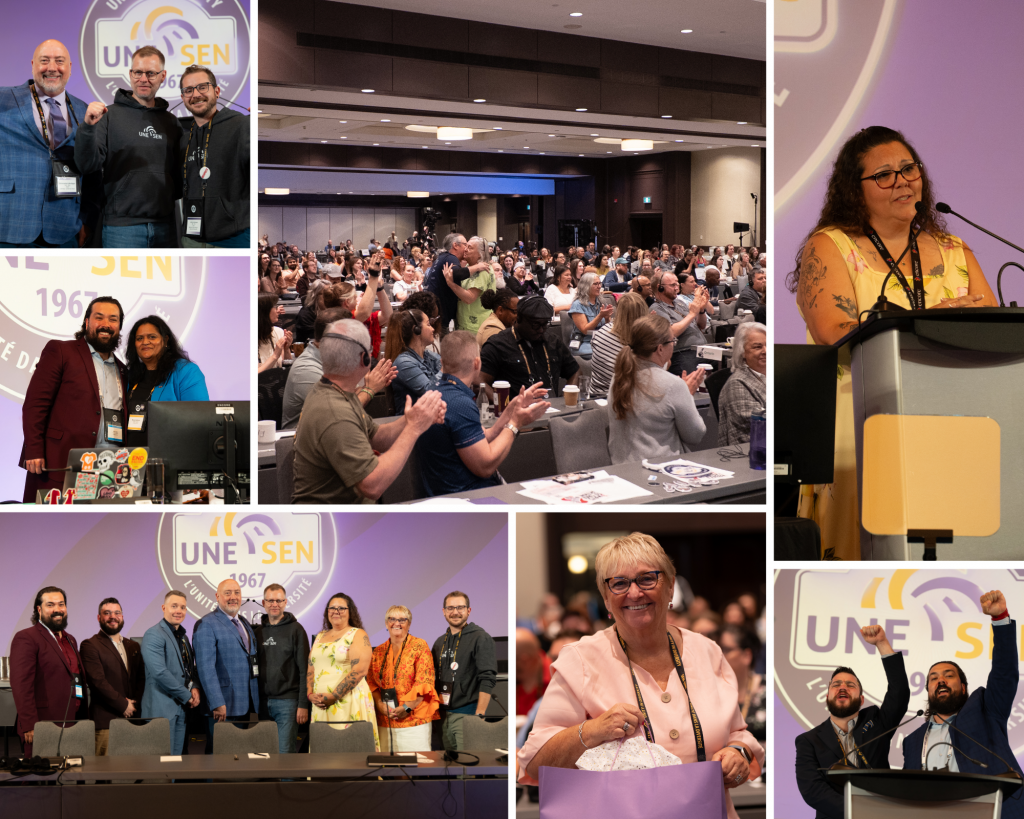
Delegates gathered at the Union of National Employees (UNE) triennial convention and elected the National Executive and Regional Vice-Presidents for the next three years.
National Officers Elected
National President: Jean-Michel Lavergne
National Executive Vice-President: Chris Little-Gagné
Vice-President, Human Rights: Mylène Seguin
Vice-President, Occupational Health and Safety: Ellen Cross
New configuration of the National Capital Region
The convention also adopted a new distribution of the National Capital Region (NCR), which is now divided into five sectors: Ottawa Center, Ottawa North, Gatineau Center, Gatineau South and Separate Employers.
Regional Vice-Presidence
– Saskatchewan : Nathan Pylypuk
– Quebec: Éric Drouin
– Gatineau-Center: Éric Poitras
– Gatineau-South : Christine Savard
– Ottawa Center: Cindy D’Alessio
– Ottawa-North: Shawn Walker
– Separate Employers: Anna Braddon
– Ontario: Michelle Woods
– Manitoba: Cheryl Dubree
– British Columbia and Yukon: Trevor Makela
– Atlantic: Angela Decker
– Alberta, Northwest Territories and Nunavut: Cheryl Carty
Start date
The mandate of the new National Executive will be guided by continuity: to continue the rigorous work accomplished under trusteeship, to maintain service to members, and to ensure that the progress made becomes a lasting achievement for all members of UNE.
Given the progress made, UNE Trustee, Alex Silas, is confident that he will be able to propose the lifting of trusteeship to the PSAC National Board of Directors in the coming months, so that the newly elected executive can begin its 2027-2029 term next January.
Here is a quick recap of UNE 2026 Triennial Convention first days:
Sunday — Getting started
Delegate training, the first regional caucuses, and the presentation of the 2025 financial statements got convention off to a great start during the pre-convention day.
Monday — Day 1
Registration, welcome remarks from the trustee, a moment of silence, and the official kickoff of convention! Sharon’s speech got everyone in great spirits. In the afternoon, delegates headed to the demonstration by Sir George-Étienne Cartier House, a Park Canada site — the rain didn’t hold back, and it turned into a powerful moment of solidarity for all our bargaining tables. Back in the room, delegates got to work on resolutions.
Tuesday — Day 2
Delegates adopted the budget proposed by the pre-convention finance committee, then dove into bylaw resolutions — tough work, but work that will pay off. The room was also energized by an inspiring speech from our special guest, Larry Rousseau. Later in the day, the chair acknowledged the passing of Dolly Parton, and the whole room came together to sing 9 to 5 in her honour.
Wednesday — Day 3
The last day devoted to resolutions, and a lot got done! UNE now has 12 regions:
Atlantic: the provinces of Nova Scotia, New Brunswick, Prince Edward Island, and Newfoundland and Labrador.
Quebec: the province of Quebec, except Gatineau.
Ontario: the province of Ontario, except Ottawa.
National Capital Region (Separate Employers): all non Treasury Board employer locals in the NCR.
Manitoba: the province of Manitoba.
Saskatchewan: the province of Saskatchewan.
Alberta, Northwest Territories and Nunavut: the province of Alberta, the Northwest Territories and Nunavut, including Kootenay and Yoho National Parks.
British Columbia and Yukon: the province of British Columbia and Yukon Territory, except Kootenay and Yoho National Parks.
National Capital Region – Gatineau South (Treasury Board): Locals 70044, 70125, 70172. 70263, and 71200
National Capital Region – Gatineau Centre (Treasury Board): Locals 70027, 70101, 70148, 70312, 70404, and 70410
National Capital Region – Ottawa Centre (Treasury Board): Locals 70059, 70160, 70176, and 70380
National Capital Region – Ottawa North (Treasury Board): Locals 70151, 70130, 70181, 70342, and 70381
A round table featuring Craig Reynolds, Mary-Anne Walker, Doug Marshall, and Ruth Lau MacDonald sparked great discussion among delegates, who worked through all the resolutions — including the young workers’ resolution, confirming the UNE Young Workers Committee. The day wrapped up with Dolly Parton songs filling the room.
All delegates had the opportunity to hear from the candidates for the national positions on Wednesday evening. Election day is here: president, vice-presidents, vice-president human rights, vice-president health and safety, plus all alternate, assistant, and regional VP positions. We can’t wait!
Before we wrap up our journey to Convention, there is one last thing every delegate should know: the Rules of Order.
If you are a first-time delegate, the rules may seem a little intimidating at first; even if you have attended Convention before, a quick refresher never hurts.
We encourage everyone to attend New Delegate Training on Sunday, August 23, from 9:00 to 10:30 a.m. It is a great opportunity to review how Convention works, ask questions and get comfortable with the process.
Why do we have Rules of Order?
Rules of Order give everyone a fair and consistent way to participate in debate and make decisions.
UNE generally follows the PSAC Rules of Order, which establish the basic framework for speaking, making motions, debating and voting. UNE’s own governing documents also provide rules that apply specifically to UNE proceedings and Convention.
At Convention, delegates wishing to speak go to the microphones and wait to be recognized by the Chair.
One of the UNE Convention practices you will notice is the use of a PRO microphone and a CON microphone. This helps ensure that different sides of a question can be heard and that debate remains balanced. When you are recognized, identify yourself and the body you represent, then clearly state why you are speaking.
PSAC’s Rules of Order provide for three-minute speeches. Keep your remarks focused on the question before Convention and respect the time available to other delegates.
Motions and amendments
Much of Convention business moves through motions and amendments.
A motion puts a question before Convention. An amendment proposes a change to that motion.
You do not need to memorize every procedural rule. Your delegate binder and the Convention team are there to help, and the Chair will guide the floor through the process. The Chair’s role is to ensure that the rules are followed, that debate remains orderly and that delegates have a fair opportunity to participate. If you are unsure about a procedural matter, listen to the Chair’s instructions or raise the appropriate point of order.
The most important rule? Participate.
Listen to the debate. Read the resolutions. Ask questions. Speak when you have something to contribute. Respect different points of view.
If you are a young worker or this is your first Convention, don’t be shy. Your perspective matters, and your voice belongs in the room.
This is the final article in our Journey to Convention 2026 series. We hope these articles have helped you understand Convention, prepare for your role and feel ready to take part.
Have a great Convention. Participate, share your perspective, listen to others — and help shape the future of UNE.
Convention brings together delegates from across the Union of National Employees to make decisions that will help guide our union for the next three years.
But what exactly does it mean to be a delegate? And how does Convention move from discussion to decisions?
Here is what you need to know.
Who do we call a delegate at UNE?
Delegates are members of the National Executive as well as members who have been selected to represent their local section, the young workers in their region, or their equity group.
While every UNE member has a stake in the future of our union, delegates have an important responsibility at Convention: they participate in debates, vote on the business brought before Convention and elect the national leadership of UNE.
They bring with them the perspectives and priorities of members from their Locals and regions, making Convention a place where voices from across UNE come together.
How Does Convention Business Work?
A large part of Convention is dedicated to considering resolutions submitted by Locals, committees and other bodies entitled to submit them under UNE’s governing documents.
Before Convention, resolutions are reviewed by the appropriate pre-Convention committees. Committee members examine and debate each resolution and make recommendations on how Convention floor should deal with it.
Delegates then have the opportunity to debate the issues before making a decision through a vote. This process allows proposals to move from an idea raised by members to a decision made collectively by Convention.
From Resolutions to Decisions
When a resolution comes before Convention, delegates consider both the proposal itself and the recommendation of the committee that reviewed it.
Delegates may speak to the issue, debate it and, where permitted under the Rules of Order, propose changes before voting.
Once Convention has made its decision, that decision becomes part of the direction given to UNE for the next three years. That is why Convention business matters: they help shape the work and priorities that follow.
Electing UNE’s National Leadership
Convention 2026 will also include the election of UNE’s National Executive.
This is another important responsibility entrusted to delegates and another way Convention directly shapes the future of the union.
Your Role as a Delegate
Being a delegate means being an active participant in Convention.
That means coming prepared, reviewing Convention materials, listening to different perspectives, participating in debate and voting on the decisions before you. To help you make the most of your role as a delegate, we have put together a Convention binder with the key information and resources you will need throughout the week — including the agenda, Rules of Order, committee reports, allergen notices and more. Think of it as a tool to help you stay informed, prepared and ready to participate.
If you are a young worker or attending Convention for the first time, don’t be shy about taking part. Convention benefits from different experiences and perspectives, including those of members participating for the first time. Your point of view matters, and your voice belongs in the discussion.
Every debate, every vote and every decision contributes to the collective direction of UNE.
Delegates make decisions on behalf of UNE members and help determine the direction of our union for the next three years.
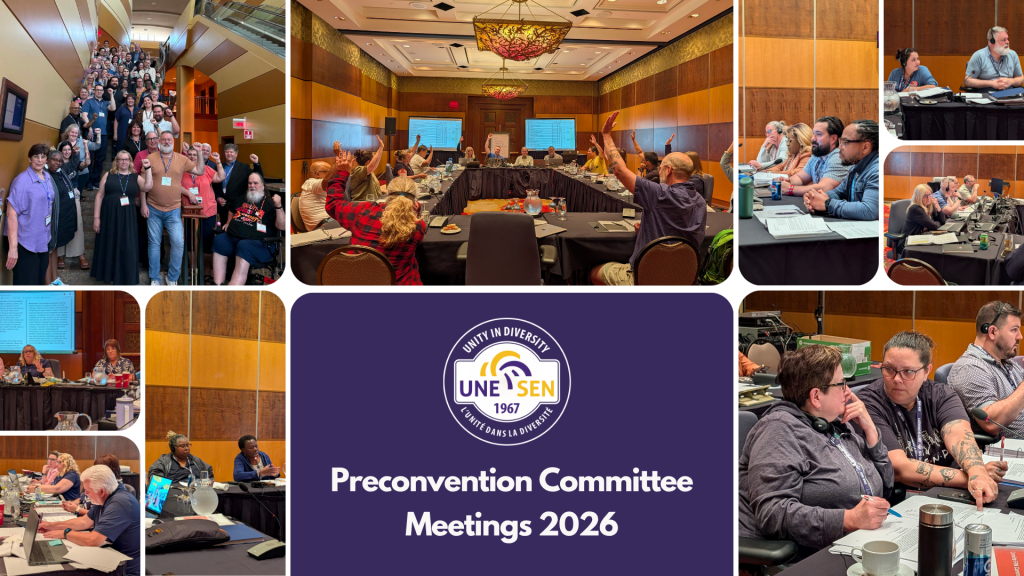
Between June 7 and June 11, 2026, UNE committee members gathered in Gatineau at the Hilton Lac‑Leamy for the pre‑Convention committee meetings. Over several focused days, delegates rolled up their sleeves and began the essential work that ensures Convention runs smoothly.
These meetings are where every resolution submitted by UNE members nationwide is reviewed, debated, prioritized, and prepared. The work done here allows delegates in August to make informed decisions that will shape the future of our union.
Convention Committees
Three committees met in June:
Finance Committee, General Committee, and the Constitution & Bylaws Committee.
Across all three committees’ members examined the resolutions submitted by locals and members across the country. Their responsibilities included:
Reviewing each resolution carefully
Debating concurrence or non‑concurrence
Analyzing impacts on UNE’s structure, operations, and members
Prioritizing resolutions so Convention delegates can debate them efficiently
Preparing clear recommendations for Convention 2026
While the Finance Committee also receives resolutions, their primary responsibility was developing the UNE budget for the next three years. Their focus was to build a budget that ensures UNE can deliver everything its members need to function effectively.
All committees work will be shared at Convention.
Delegates at Convention will vote in August for each resolution in the order of priority prepared by the committee. The thoughtful preparation done in Gatineau ensures that debates will be organized, informed, and grounded in the needs of the membership.
Who Serves on These Committees
Committee members were selected by UNE’s current Deputy Trustee and PSAC Vice‑President, Alex Silas, with a clear goal: representation that reflects the full diversity of UNE. All members of the committee will be Convention.
Delegates included voices from:
Every UNE region
Equity groups
A wide range of workplaces
With all perspectives in one room, the union becomes more balanced, more representative, and better equipped to address the real needs of its members.
Throughout the week, delegates considered how each resolution would strengthen UNE, support members, and position the union for the future. They asked important questions:
Would this proposal help build a more effective organization?
Does it support members equitably?
Will it help UNE remain strong, stable, and member‑driven for years to come?
Our Journey to Convention 2026
The debates have begun, the groundwork has been laid, and momentum is building. Delegates at Convention will make the final decisions in August, but the collaborative work completed between June 7 and June 11 has already shaped the path forward.
The future of our union starts here—through the careful, democratic, member‑driven work of Convention committees. Thanks to the dedication of UNE members from across the country, that future is already taking shape.
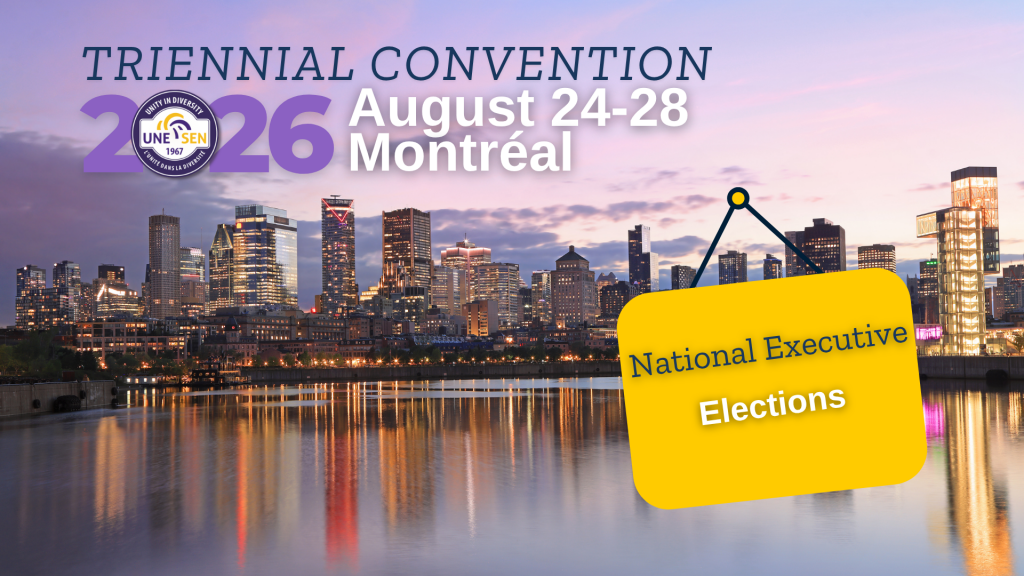
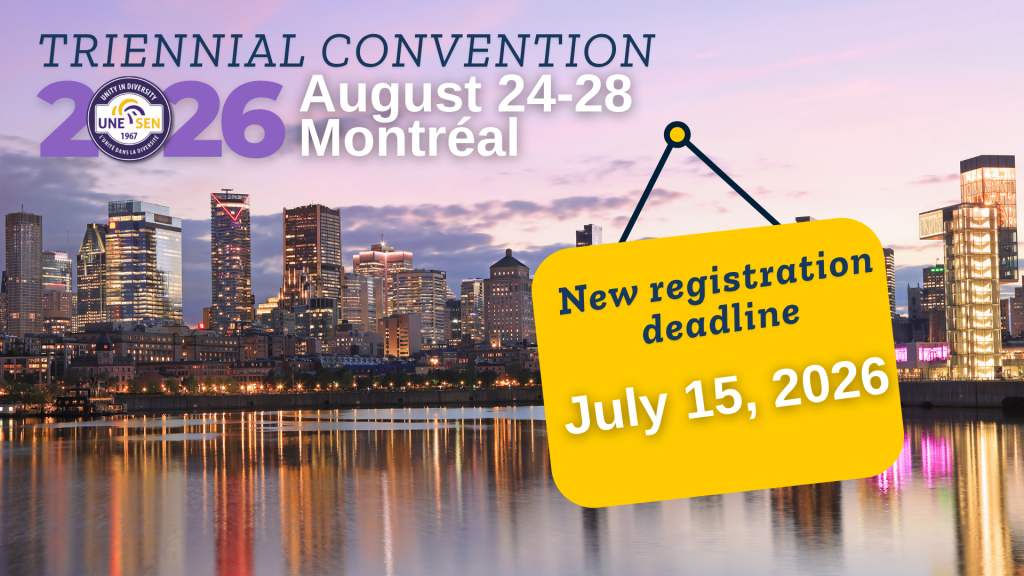
The 2026 UNE Triennial Convention—taking place August 24 to 28—marks an important and encouraging moment for our Component.
This Convention represents a meaningful step forward in rebuilding UNE’s democratic structures. While trusteeship remains in place, Alex Silas, PSAC National Executive Vice-President and the UNE Trustee appointed by PSAC’s National Board of Directors (NBoD), has expressed confidence based on engagement with rank-and-file members and regional leaders that UNE is moving in a positive direction, with strong signs of progress and renewed engagement from members.
The upcoming elections are a key part of that ongoing journey.
We are happy to announce that elections will be held during 2026 UNE Triennial Convention on Thursday, August 27. National elections will take place on the Convention Floor and Regional elections will take place during regional caucuses.
National elections will be chaired by Alex Silas as Convention chair and Trustee. Regional elections, which may run concurrently in different caucuses, will be chaired by qualified individuals selected by the Trustee. A nomination committee of delegates to Convention will be struck shortly to review nominations forms.
National Elections
Delegates will elect the following National positions:
National President
National Executive Vice-President
National Vice-President, Human Rights
National Vice-President for Occupational Health and Safety
1st Alternate National Executive Vice-President
2nd Alternate National Executive Vice-President
Assistant National Vice-President, Human Rights
All-Candidates Debate
The All‑Candidates Debate for all national positions listed above will take place on Wednesday, August 26.
Regional Elections
Regional elections will take place during regional caucuses. Delegates will elect:
Regional Vice-President
1st Assistant Regional Vice-President
2nd Assistant Regional Vice-President
3rd Assistant Regional Vice-President when applicable
Regional Human Rights Representative
1st Alternate Regional Human Rights Representative
2nd Alternate Regional Human Rights Representative
Alternates to the PSAC Convention(regions may elect as many alternates as they wish)
These caucuses ensure strong, representative leadership across all UNE regions and help shape UNE’s voice at the PSAC Convention. The agenda of the week of Convention including caucus will be shared soon.
An email will be sent to all locals shortly. If you are running for any elected office, you are encouraged to familiarize yourself with the following Policies and Bylaws to ensure democratic and fair elections:
This year’s elections carry special significance. The decision to proceed with elections was not taken lightly by the UNE Trustee, it reflects the progress UNE has made in rebuilding its democratic structures and strengthening the organization.
Over the past months, UNE has seen increased engagement and confidence from members and locals. More local are in conformance thanks to hard work of Deputy Trustees and UNE staff, who worked together to make improvements and support locals in their rebuilding efforts. UNE staff processes have strengthened, and important work in areas such as representation services has continued to move forward.
These positive developments have contributed to renewed confidence in UNE and establishing positive conditions to conduct a full and fair electoral process. The upcoming elections mark an important milestone in the union’s ongoing renewal and demonstrate continued progress toward a strong, accountable, and member-driven Union of National Employees.
Delegates will play a central role in choosing the leaders who will guide UNE through its next chapter and build on the momentum achieved to date.
While there is still work ahead, the return to a full electoral process is a strong sign of momentum and confidence in UNE’s future.
Last week, UNE delegates from across the country gathered in Gatineau for the pre‑Convention committee meetings. From the first morning, delegates rolled up their sleeves and got straight to work, engaging in discussions that will shape Convention 2026.
Across all three committees, members reviewed the resolutions submitted by UNE members nationwide and examined the budget for the next three years. They debated concurrence and non‑concurrence, analyzed impacts, and began the important work of preparing recommendations for Convention. While delegates at Convention will have the final say in August, the groundwork being laid last week was essential.
Throughout the week, delegates focused on how each resolution would strengthen our union, support members, and position UNE for the future. They considered whether proposals would help build a more effective organization and ensure UNE remains strong, stable, and member‑driven for years to come.
Unity in Diversity
One of the strengths of the process is the diversity of voices at the table. Delegates were chosen because they bring perspectives from every region, equity group, and workplace. When all those experiences come together in one room, our union becomes stronger, more balanced, and more representative of the membership we serve.
Solidarity in Action
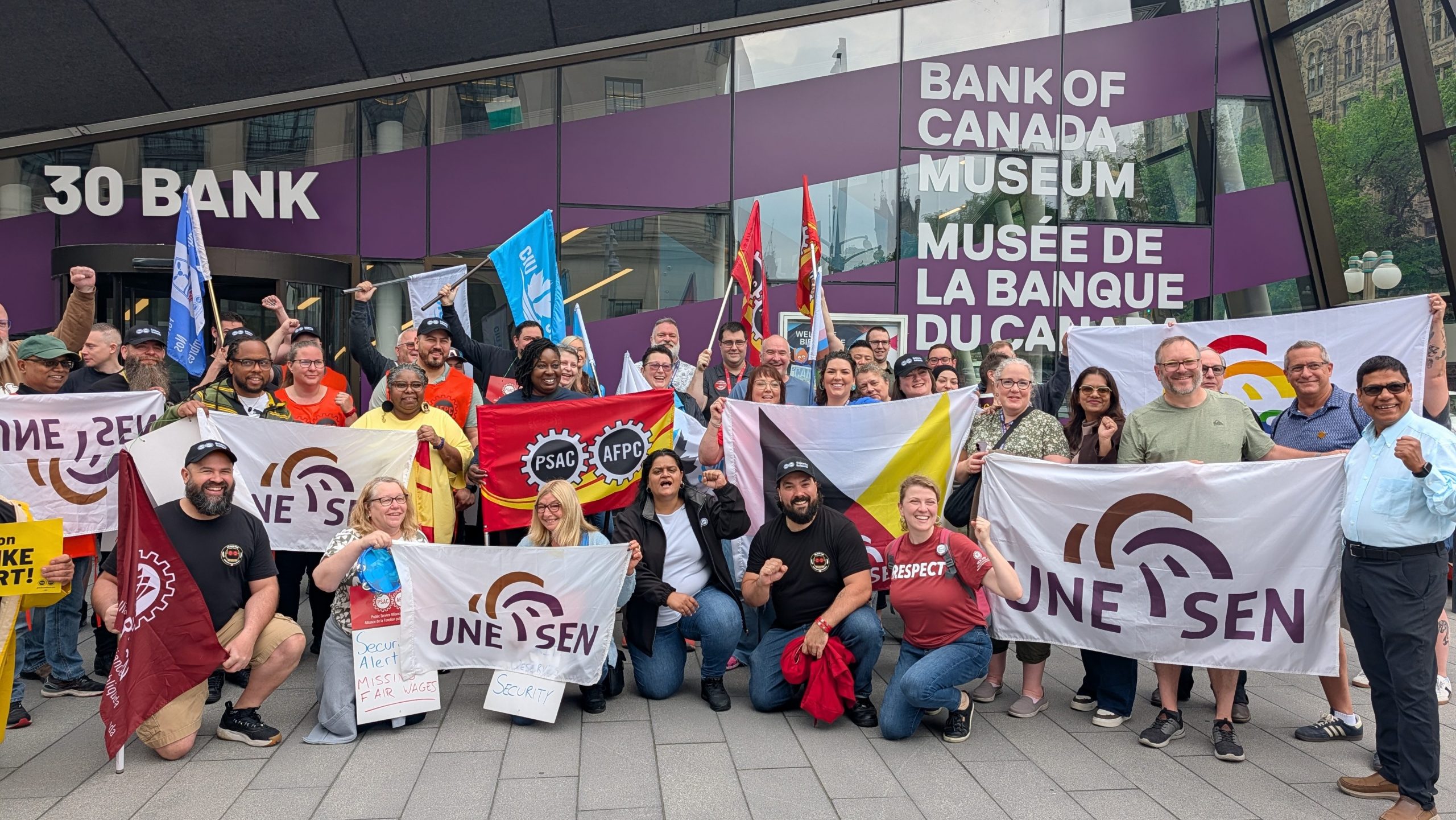
The week also included a moment of solidarity as delegates visited Bank Street to support our union siblings — the Bank of Canada Security Guards. Standing together is what defines us. Our presence was a reminder that solidarity extends beyond the meeting room and that our strength lies in supporting one another.
Looking Ahead to Convention 2026
The debates have begun, the groundwork has been laid, and the momentum is building. Delegates at Convention will have the final say in August, but the thoughtful, collaborative work completed last week has helped set the decisions ahead.
The future of our union starts here — and it is already taking shape.
Resolutions are one of the main ways members bring issues forward and propose changes, improvements, or new directions at UNE Convention.
If you want the union to act on an issue that matters to you — a resolution is how you make it happen.
What Is a Resolution? A resolution is a short and structured proposal that identifies an issue or concern, explains why that issue matters to members, and proposes a clear action for the union to take in response.
How to Write a Strong Resolution
The most effective resolutions are clear, focusing on one issue at a time; action‑oriented, stating exactly what you want the union to do; and concise, keeping the proposal short and to the point.
Most resolutions follow a simple format:
“The Union of National Employees will” — states what action should be taken
“Because” — explains the context or problem
Example:
The Union of National Employees will encourage unions to submit resolutions to convention in a clear language format.
Because the actions proposed will be better understood by convention delegates.
Because clear language is a valuable way to help union members feel included by the labour movement.
Because the clear language format makes sense: we start with what we want, then we back it up with our reasons.
Typically, the process begins at the Local level, where you bring your idea to a meeting, discuss and refine it with fellow members, and then participate in a vote to decide whether the Local will submit the resolution to Convention.
This helps ensure resolutions reflect the priorities of the membership.
Even a rough idea is a great starting point, so do not limit yourself. Your Local can help you:
Develop your idea
Draft the resolution
Ensure your resolution meets submission requirements
Submitting a Resolution
Resolutions are submitted before the main deadline, allowing time for review by the Pre-Convention Committees (Finance, General, or By-Laws & Policies).
Submitting early ensures your resolution can be fully reviewed and discussed.
For Convention 2026, the deadline to send your resolutions is May 29th, 2026.
Late Resolutions Resolutions received after May 29th, will be considered late resolutions. They will be considered only after all other resolutions have been reviewed and debated, with discussion time often more limited as a result.
Emergency Resolutions Emergency resolutions are introduced during Convention.
They must address issues that:
Could not have been anticipated earlier
Require immediate attention
Because of their nature, they must clearly demonstrate why they meet these criteria.
How to Submit a Resolution
You should submit your resolutions electronically on our website. Completing this process significantly reduces the time required to prepare resolutions for our committees’ review. If you do not have internet access, you can submit your resolutions by mail or fax.
Submit Supporting Documentation
Resolutions submitted online must be supported by signed minutes confirming that the resolution was adopted at a general local meeting.
Scanned copies must be sent to Ateau Zola at resolutions@une-sen.org.
You may also submit supporting documents by mail or fax.
Submission Deadline
Please send your resolution before May 29th, 2026. Any resolution received after this date will be classified as a late resolution and will only be reviewed and debated after all other resolutions, with more limited time for discussion.
Have an idea? Bring it forward.
Resolutions are one of the most powerful ways members shape the future of UNE.
Your voice matters — and Convention is where it’s heard.