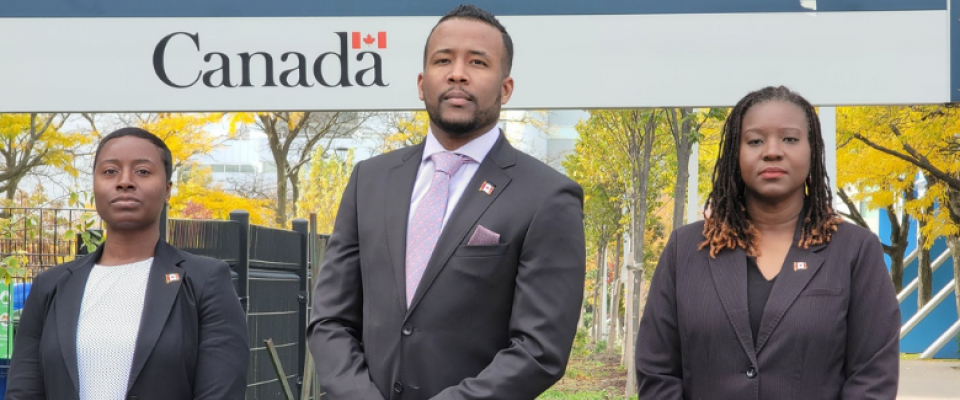
Black History Month is an opportunity to reflect on and celebrate the contributions and accomplishments of Black leaders, workers, cultures and communities across Canada. Our labour movement has been shaped and fortified by the leadership of people of African and Caribbean descent, and we are proud to build and grow in solidarity together toward a more equitable future.
This Black History Month, PSAC invites you to register for a national virtual panel discussion on February 20, 2023 with Black leaders in Canada’s labour movement.
“Black History Month is about honouring Black excellence and the continued perseverance of leadership within our communities,” said Craig Reynolds, PSAC Ontario Regional Executive Vice-President, who will moderate the event.
“We have been at the forefront of the fight to end racism and discrimination, rallying for workers’ rights and transforming our labour movement into a powerful avenue for social change. Our accomplishments must be recognized, and our achievements celebrated.”
Join us to celebrate Black labour leaders in Canada. Learn about the victories and challenges faced by Black labour leaders, how they bring a more inclusive approach to labour’s agenda and are shifting the landscape towards a more equitable workplace and society for everyone.
“Black labour leaders are keeping the movement accountable to end discrimination and remove systemic barriers to make our workplaces more inclusive for everyone,” added Jan Simpson, President of the Canadian Union of Postal Workers, who will be part of the panel.
What: A virtual panel discussion to celebrate Black leadership in the Canadian labour movement
Who:
Craig Reynolds, Regional Executive Vice President for PSAC Ontario (moderator)
Jan Simpson, President, Canadian Union of Postal Workers
Jason MacLean, Secretary-Treasurer, National Union of Public and General Employees
Marc-Édouard Joubert, President, Regional Council, Fédération des travailleurs et travailleuses du Québec
The panel will be offered in English and French with simultaneous interpretation. After registering, you will receive a confirmation email with more details about joining the panel.
The Council for Global Equality have partnered with Franklin and Marshall College in Pennsylvania to launch the first ever global LGBTQI perception index, which is aiming to get a comparative sense of how LGBTQI people in different countries feel about their human rights and safety in their countries. They’ve received 165,000 responses so far, but have indicated to me that the responses from Canada are fairly low, with only about 1,800 Canadians responding. They’d like to increase that number and if you are able to share this out to your networks, that would be great. I did the survey and it really is only a few questions and doesn’t take more than a minute.
Chris Little-Gagné (he/him/il) UNE National Equity Representative for 2SLGBTQ+
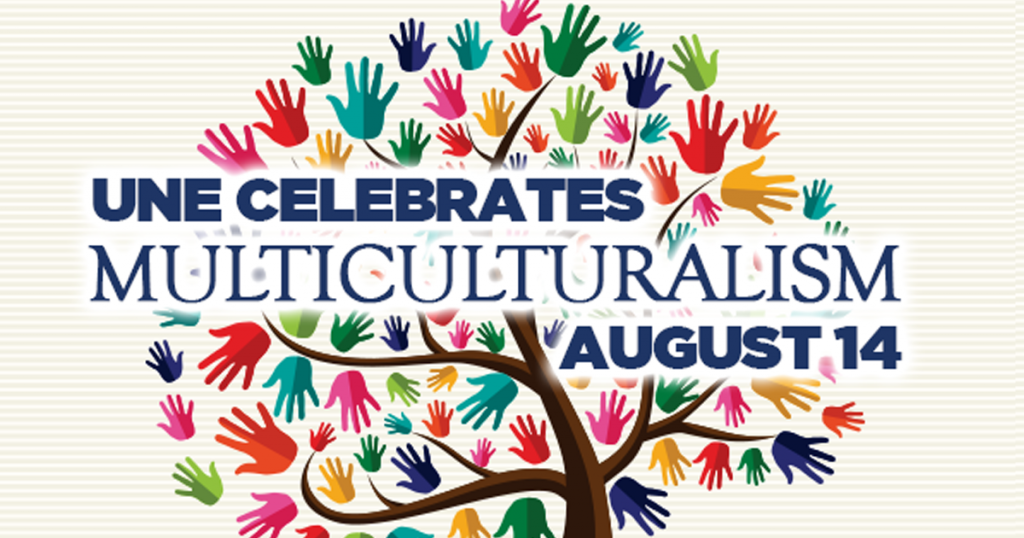
Canada is fortunate to have a population that is made up of numerous distinct ethnic and cultural groups. Since the 1970s the Canadian Government officially adopted the ideology of Multiculturalism because of its emphasis on the social importance of immigration.
In the early days of the promotion of Multiculturalism, the dominant culture was very intimidated by the influx of various ethnic and cultural groups. It was often said that “if you come to Canada, you should be forced to adopt the Canadian culture”. This confused me because I didn’t fully understand what exactly “Canadian culture” was? My Canadian friends identified as Italian, French, or even European. Should I be adopting one of these cultures to be considered Canadian? Should I be eating more poutine, or adopting the word “eh” into my vocabulary? I was already using a tuque and ordering a double, double from Timmy’s. I even bought a Two-Four from the beer store for the May 2/4 long weekend, but I was still not considered Canadian enough.
When local governments began promoting multicultural events in various cities, that is when I “came out of the closet” and openly practiced my ethnic culture. I was no longer afraid to be me. I did not have to be embarrassed about practicing my culture openly in public. I could freely wear my ethnic clothing, eat my ethnic food and observe my culture’s art and music being appreciated by all. It also gave me the opportunity to learn about and appreciate the food, art and music of other cultures. It made me a more aware and appreciative person. To me, appreciating the cultures of all communities is what made me a true Canadian.
Multiculturalism is intended to encourage the various cultures to thrive in our society. I believe that a true “melting pot” would only flourish in a society that shows respect and appreciation for all cultures within that community. Some people believe that the promotion of multiculturalism would promote tribalism…. It would cause people to only interact within their own communities. That is not true. People tend to be intimidated by what they don’t know or understand. When people don’t understand the language that you speak or the religion that you follow or the food that you eat, they tend not to make the effort to integrate. This gives rise to tensions between people of different cultural backgrounds. People are too afraid that multiculturalism would result in their culture being eroded. However, the more one is exposed to other cultures, the more comfortable one become with integrating.
I believe that there are a lot more advantages to Multiculturalism than most people realize. It promotes a higher level of tolerance towards minorities, which in turn leads to a more peaceful society. When we learn from different cultures, life becomes much more exciting. It helps us to be more respectful of others and appreciate the cultural values and social norms of all. Beyond the Food and the Festivals, interacting with people of various backgrounds helps us to breakdown the ethnic or social stereotypes that one may have previously adopted. This helps us to look at things from various points of view and to work collaboratively in diverse ethno-social groups. In a multicultural society one is exposed to new ways of doing things and a different perspective of looking at things. This could only benefit us as a society.
The most important benefit of Multiculturalism is that it promotes the adoption of social justice for all. On this Multiculturalism Day let us all celebrate the diversity of all the communities in Canada and to affirm our commitment to democracy, equality, and mutual respect to all cultures in our world.
Sam Padayachee National Equity Representative for Racialized Members
In 1834 the British Parliament abolished slavery in the British Empire. In March 2021, Canada’s House of Parliament finally voted to recognize the end of this atrocious part of our history by designating August 1st as Emancipation Day.
Although this day marks the end of the enslavement of People of African descent, Emancipation Day must be observed as the recognition of the struggles of all marginalized communities. A struggle that continues to this day. When we recognize the struggles of the past, we can take steps to avoid repeating those mistakes and move forward to improving the lives of all the people.
We need to realize that signing a piece of paper to abolish slavery may have ended the physical bondage of Canadians of African descent, but the mental bondage, the mental slavery still exists. Nelson Mandela said, “For to be free is not merely to cast of one’s chains, but to live in a way that respects and enhances the freedom of others”. I believe that one way in which we can begin to erode this mental bondage is to teach the next generation of Canadians the parts of our horrendous history that has been ignored and to ensure that these atrocities never happen again. We need to learn about our true history and heritage so we can begin to move forward with the healing.
As a society, we need to come up with new and innovative ways of combating all forms of oppression that we experience today. In other words, we need to identify the social, economic, legal and political restrictions imposed on marginalized communities and ensure that appropriate steps are taken to liberate these communities. We still experience discrimination in health, housing, employment, gender, sexual orientation, and economic equality, to name a few. Until we overcome these obstacles, Canada will not be a free and just home for all of its people.
On this second Emancipation Day in Canada, let us all remember the past, reflect on the present and plan for the future. Peace, Justice and Freedom for all.
“A luta continua”
Sam Padayachee UNE National Equity Representative for Racialized Members
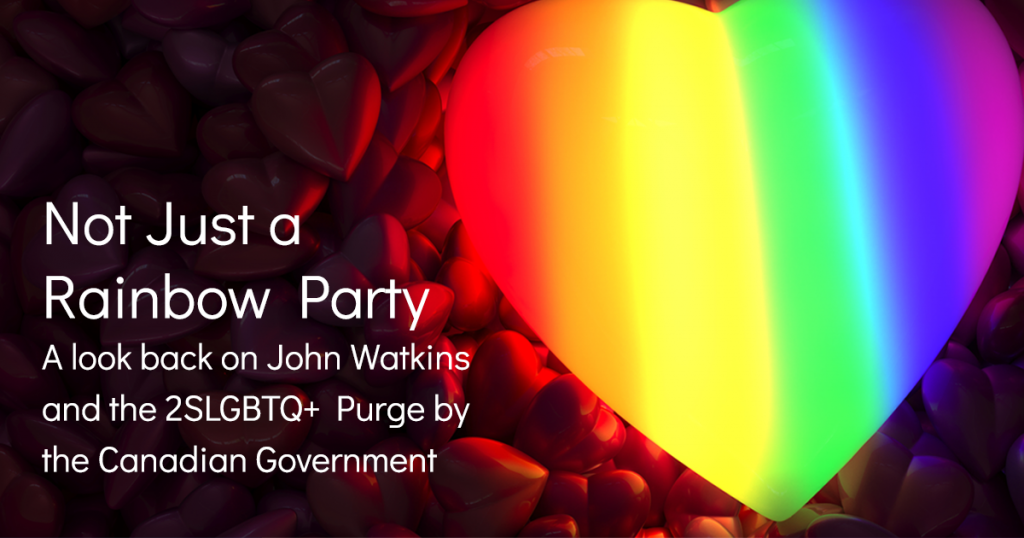
A look back on John Watkins and the 2SLGBTQ+ Purge by the Canadian Government
By Kay Hacker
Content warning: This article includes explicit descriptions of systematic, institutionalized homophobia and transphobia, as well as non-graphic descriptions of violence against members of the LGBTQ2S+ community. This article also contains non-graphic mentions of torture and death. Finally, this article talks in-depth about police violence and police brutality involving the RCMP.
Every June, the rainbow flags come out for the ultimate celebration of love and all the diverse forms it takes- a way to celebrate our Lesbian, Gay, Bisexual, Transgender, Queer, Two-Spirit and otherwise Queer and Trans (LGBTQ2S+) siblings in all their beautiful diversity. Many people wonder- why June, specifically?
Well, Pride isn’t always in June. In fact, in Vancouver, Pride is usually celebrated in August! This year marks Vancouver Pride’s 44th anniversary. But internationally, June is recognized as Pride month as a result of the Stonewall Riots in New York City. The Stonewall Inn is a well-known gathering place for LGBTQ2S+ people. In the 60s, it was subject to frequent police harassment. When the police raided the bar in 1969, the patrons (many of whom were trans women of colour) fought back and rioted against police brutality.
See, that’s the thing about Pride: it’s more than just a rainbow party, and more than just a celebration. Pride is a reminder to keep fighting. Pride is a reminder that we as LGBTQ2S+ people are still here, a rebuke and vindication against those who have tried to erase us.
Let me tell you about this fight. Let me tell you about the history of LGBTQ2S+ membership in the public service.
In the 1950s and 60s, the Canadian government made a concerted effort to remove any “suspected homosexuals” (not the words we would use today) from the public service. At first, the focus was mainly on MSM (men who have sex with men), as well as men who acted in ways that did not conform to their expected gender roles, such as wearing the wrong kind of clothes, since the vast majority of public servants were men. WSW (women who have sex with women) and women who acted outside their expected gender roles were also subject to persecution.
Why? Because they stepped outside of what society expected and that was considered dangerous. This was the Cold War, and for the Canadian government it was Us against Them. And there could be no “homosexuals” on our side, therefore They must be against Us.
It was considered a threat to national security to have LGBTQ2S+ people in the public service and specifically in the diplomatic apparatus, since gay public servants might be vulnerable to blackmail. Anything other than perfectly adhering to the gender you were assigned at birth and being attracted to the correct gender in the correct way left folks exposed to violence, discrimination and even criminal prosecution. So, according to the Canadian government, the best way to make the public service less vulnerable to blackmail was to uncover and uproot every possible weak spot (read: LGBTQ2S+ person) before the Russians could.
Despite the fact that there was no evidence of any successful attempts to blackmail LGBTQ2S+ members of the public service, the RCMP launched a massive campaign to unearth any member of the public service suspected of “perversion”. They monitored LGBTQ2S+ establishments and photographed patrons, conducted brutal interviews of suspected and confirmed gay public servants and tracked people down in their private lives. I invite you to think of each violation of these peoples’ basic human rights as an act of violence. LGBTQ2S+ public servants were forced into hiding, fearing for their jobs and for their safety. Thousands of “suspected homosexuals” were put on file in what is now called the LGBTQ purge.
All of this happened at the same time that the Public Service Alliance of Canada was taking shape and stepping up for public servants. This happened when my grandparents were finishing high school. You might have been alive when this happened- you certainly know at least one person who was.
I’m only telling you a small portion of the story today. I want to include so much and I know that there is still so much left to uncover. And at the same time, writing this article has been very difficult for me. Each personal narrative that I read, every article trying to capture the sea of pain in a tidy bucket… it feels like a punch in the gut. This is my community- both the LGBTQ2S+ community, and the public service.
To end this article, I want to tell you the part of the story that hit me the hardest and has stuck with me, even now: the story of one man, one victim of the LGBTQ purge. For me, the entire LGBTQ purge is filtered through his experience.
Let me tell you about John Watkins.
John Watkins was Canada’s first ambassador to Moscow. By all records, he was quite good at it, arranging for a landmark meeting between Lester B. Pearson (then-minister for external affairs) and Nikita Khrushchev, the leader of the Soviet Union. He was a good diplomat, and a good man- popular in the public service, always with a story to tell. He was also a man who was attracted to other men. John Watkins died in 1964 at the age of 62, in a hotel in Montreal, of a heart attack. He died at the end of a four-hour long interrogation by the RCMP. By that point, he had been under constant surveillance and daily 3–4-hour interrogations for almost a month.
I would classify 28 days of interrogation as torture. The RCMP classified it as “need-to-know” information, had him declared dead of a totally coincidental heart attack and kept the reality of the situation secret until 1981. The purge of LGBTQ2S+ public servants continued until the early 1970s. LGBTQ2S+ purges continued in the RCMP and the military up until the 1990s.
The government apologized for the purge in 2017, a year before I joined the public service, and paid out a settlement to many of those affected, after victims spent years fighting for recognition.
This is not ancient history- this is living memory. As we celebrate Pride this year, as we lift up LGBTQ2S+ people in our lives, we must remember what came before- the bloody, brutal fight for recognition, and the many barriers towards LGBTQ2S+ survival. Those of us in the PSAC must recognize the history of violence against our LGBTQ2S+ members and work to avoid perpetuating this harm ourselves. The union was not able to protect LGBTQ2S+ members in the past. We will do better this time. We must.
I ask you, this Pride season, as you put up rainbow stickers and temporary tattoos, to remember John Watkins. Remember where we came from. Allies must learn to live with this tragic history, hold space for our pain, because for LGBTQ2S+ public servants, this tragedy is inescapable. It is part of the burden taken on when we chose to be public servants, and it is a burden borne most heavily by public servants who are out and proud.
We must all work towards a better future. The battle for LGBTQ2S+ rights is not over just because June has passed. LGTBQ2S+ people invited you to the party. Now, we invite you to the fight.
Kay Hacker –Local 20278.
Sources:
Levy, R. (2018, October 3). Canada’s Cold War purge of LGBTQ from public service. The Canadian Encyclopedia. Retrieved June 2022, from https://www.thecanadianencyclopedia.ca/en/article/lgbtq-purge-in-canada
Our history. Public Service Alliance of Canada. (n.d.). Retrieved June 2022, from https://psacunion.ca/our-history
UPI. (1981, December 23). RCMP interrogation of Canada’s first ambassador to Moscow, John Watkins, was kept secret to prevent scandal and to keep counter-espionage operations under wraps. UPI. Retrieved June 2022, from https://www.upi.com/Archives/1981/12/23/RCMP-interrogation-of-Canadas-first-ambassador-to-Moscow-John/1926377931600/
We must accept that Black History is inextricably intertwined with the history of the world. It may not be accurately depicted in the history books, but it has and always will be reflected in our culture, our daily lives and how we perceive the world. Our experiences have shaped our past and will continue to shape our future. However, the success of our future is dependent on how successful we are in breaking those bonds of the past.
My bondage began as a little boy in grade 3. In the first history lesson of my life, the first line in our history textbook read… “In 1652, the white man brought civilization to South Africa….”. Thus began my indoctrination. A history lesson that was read by a non-white teacher, from a book written by a white historian to a class full of impressionable, young non-white minds.
After that class I remember thinking to myself that we should be grateful to the white man for saving us from living an uncivilized life in the jungle. I believed that they were the superior race, and we need to be subservient and respect them for what they have given us. This is the mindset that I carried for the next ten years until I had the opportunity to travel overseas and as a teenager interacted with white people for the first time in my life. I realized then that they were not superior human beings. Like us not understanding them, they were also ignorant of our culture, our way of life and most importantly, they were not aware of our level of intelligence. Once we got to truly know each other, the cloud of ignorance that bonded us in hate, began to dissipate. When I returned to South Africa, this enlightening experience inspired me to become actively involved with the student anti-apartheid movement. I believed that we needed to make everyone aware that at the end of the day we are all one people. There is no inferior race on this planet. We all just want to be accepted as equals and to be treated with respect.
A few years later when I returned to live in Canada, I continued to make Canadians aware of the suffering endured by people in other parts of the world and how appreciative we should all be for living in a country that has a “Charter of Rights and Freedoms”, were we all are equal under the law.
However, the more time I spent in the country and the more I became involved in the Canadian society, the more I became aware that some sections of society were treated more equal than others. Thus began my mission in Canada to confront discrimination whenever and wherever I encounter it. Education was a big part of that mission. When confronted with discriminatory behavior, I took the time to make people understand why behavior like that was offensive. I conducted workshops and delivered speeches to high school students, explaining the horrors of genocide, apartheid and slavery. I believe that the earlier we educate people on the indignity and suffering endured by the oppressed in our society, the easier it becomes to promote tolerance and understanding in the long term.
Today, the world that we live in is a much better place than the one that our ancestors lived in. It is because of the sacrifices that they had made to ensure that their descendants can avoid the same pain that they endured. Therefore, I am prepared to make as many sacrifices as needed to ensure that our next generation experiences less hate, discrimination, bigotry, racism, and harassment than we did. Together we can make our world a better place for all.
On Feb 10, 1990, Nelson Mandela was told that he would be released from Prison. His famous words outside his home in Soweto read: “As I walked out the door toward the gate that would lead to my freedom, I knew if I didn’t leave my bitterness and hatred behind, I’d still be in prison.”
”Practice the vocabulary of Love – unlearn the language of hate and contempt” – Baba
Sam Padayachee UNE National Equity Representative for Racialized Members
February is the month to celebrate the many achievements and contributions of Black Canadians and their communities who, throughout history, have done so much to make Canada the culturally diverse, compassionate, and prosperous nation it is today. Please let’s take that opportunity to learn and educate ourselves with one story at a time.
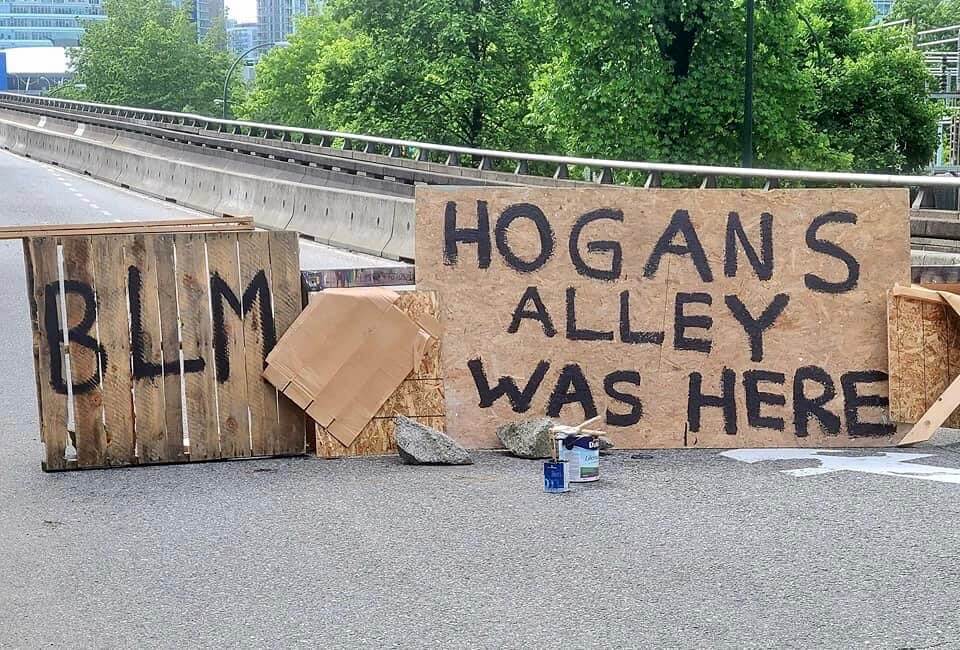
Hogan’s Alley
Do you see the viaduct in that picture? This is where Vancouver’s Black Community used to live in the 1900s.
History has shown that institutional racism often targets marginalized communities. Hogan’s Alley, in Vancouver, is one such example. The first Black immigrants (of African Descent) arrived in British Columbia from California in 1858.
They settled in Vancouver Islands but began migrating to Vancouver in the early 1900s. Hogan’s Alley was ethnically diverse but had a large cluster of Black businesses and residents (reaching over 800) that formed the nucleus of Vancouver’s first concentrated African Canadian community.
Along with the resident population, the area was a destination spot for Black train porters on layover, Black vaudeville circuits coming through via California and popular Black musicians of the time. However, the vision of urban renewal gradually displaced and eventually demolished most of Hogan’s Alley in 1972, making way for the Georgia Viaduct.
So, what was once a vibrant cultural hub for great food and jazz music in the 1960s was quickly transformed into the noise of vehicles as they passed by on the new viaduct. Like the destruction of Africville in Nova Scotia, another Black community in Vancouver was demolished. The question now is which marginalized community will be next?
In February 2008, Senator Donald Oliver, the first Black man appointed to the Senate, introduced the Motion to Recognize Contributions of Black Canadians and February as Black History Month.
Black History Month exists to remind us of all the rich contributions made within our society by people of African descent, and of their ongoing struggle for equity and social justice. This is a time to celebrate the many achievements and contributions of Black Canadians who, throughout history, have done so much to make Canada the culturally diverse nation we know today. It is also an opportunity for all Canadians, including our younger generations, to be reminded and to learn about the experiences and contributions of Black Canadians in our society, and the vital role this community has played throughout our shared history.
From abolitionists to war heroes, to sports celebrities and inventors, we celebrate the distinguished Black Canadians who have helped to make Canada a rich multicultural land. During this month I encourage UNE members to make the effort to educate themselves about some of some of these achievements. In doing so, you will become aware of how Black culture has influenced our lifestyles today…. from the poetry and music that we listen to, the food that we eat, the clothes that we wear and to advancement made in Science and Innovations.
We can no longer choose to ignore such a rich history that has had such a profound influence on all our lives today. There are many organizations and educational resources across the country devoted to the promotion and awareness of Black Canadian history.
Sam Padayachee National Equity Representative for Racialized Members
Federal court judge Jocelyne Gagné rejected the government’s earlier request for a delay. This hearing is a crucial step and will determine if the class action proceedings will continue.
The lawsuit continues to gain momentum, with 1,082 former and current Black federal public service employees seeking over $2.5 billion in damages. A large number of plaintiffs are past and present PSAC members.
If you identify as Black, Caribbean or of African descent and currently work or have worked for the federal government in the past 50 years, you are eligible to join the class action.
Background
The lawsuit reaches back 50 years, arguing the federal government perpetuated Black employee exclusion: the systemic practice of limiting skilled Black workers from career advancement opportunities, which has led to them being disproportionally underrepresented at the highest levels of the federal public service.
According to 2020 Treasury Board statistics, Black employees are one of the largest groups of racialized workers in the federal government at 3.5 per cent, yet only comprise 1.6 per cent of those at the executive level. Black workers also tend to be clustered in lower-level administrative categories.
I have often wondered about the origin of the Universal Declaration of Human Rights which was adopted by the General Assembly of the United Nations (UN) on December 10, 1948 in Paris, at the Palais de Chaillot, by resolution 217 (III) A. It specifies the fundamental rights of humankind. Because of the horrors of the Second World War, the international community decided to draw up an international bill of rights to affirm the values put forward in the fight against fascism and Nazism.
But as I continued my research, I found that the origins go back even further to Antiquity:
In the Nicomachean Ethics, Aristotle talks about the principle of dignity and the respect that the individual should have for others.
In Marcus Aurelius’ Thoughts and Cicero’s Tusculana (on the notion of jus hominum, “the right of men”), taking up Plato’s words.
In religious texts (such as the Ten Commandments, which command the right to life, to honor, etc.).
In Saint Paul, in the epistle to the Corinthians, who speaks about the interior man, totally virgin, by granting him an absolute dignity.
In literary texts, such as the play Antigone by Sophocles, or in philosophical texts, such as those of the Stoic school of thought.
Moreover, we find writings in several regions of the world like the Edict of Milan or Edict of Constantine I in the year 313; in the 13th century with the Charter of Manden in Africa; in the 15th and 16th centuries with the great Islamic jurisconsults of the Mali Empire.
Also, through the Great Texts (13th – 17th centuries), we can go back to the Middle Ages to find the first manifestations, concrete and with real effects in practice, of the idea of human rights, gathered under the name of human rights of the first generation:
The Magna Carta in 1215. This text is important but was only really used from the 17th century moving forward, as an instrument against the royal absolutism of the Stuarts.
The Twelve Articles in 1525.
The Petition of Rights in 1628.
The Habeas Corpus Act in 1679 (foundation of criminal law).
The Bill of Rights in 1689. It is considered in the English-speaking world to be the basis of current human rights concepts.
The first Declaration of Human Rights (June 12, 1776) was the one of the State of Virginia, written by George Mason, who was called “The Father of the Bill of Rights”. It was included in the Declaration of Independence of the United States on July 4, 1776, by Thomas Jefferson, and inspired the Declaration of Human Rights of 1948. A few years later, France, under the reign of Louis XVI, promulgated the Declaration of the Rights of Man and of the Citizen on November 3, 1789. Unfortunately, this declaration excluded women and it was not until 1948 and the intervention of Eleanor Roosevelt that the notion of gender was explicitly included in an international convention, the famous Universal Declaration of Human Rights of the UN.
Human rights are based on respect for the individual. Their fundamental principle is that a person is a moral and rational being who deserves to be treated with dignity. They are called human rights because they are universal. Human rights are the fundamental rights and freedoms that belong to every person in the world, from birth to death. These fundamental rights are based on common values such as dignity, fairness, equality, respect and independence.
In closing, I would like for this day to open up the discussion in your communities, your families, your workplaces because it is the basis for a better world and it is up to each of us to promote it by continuing to defend these rights. The UNE’s Human Rights Committee is proud of its leadership within PSAC and will continue to help members address the importance of respecting and defending those RIGHTS.
Daniel Toutant National Vice-President for Human Rights UNE-PSAC