Election results are in!

elections

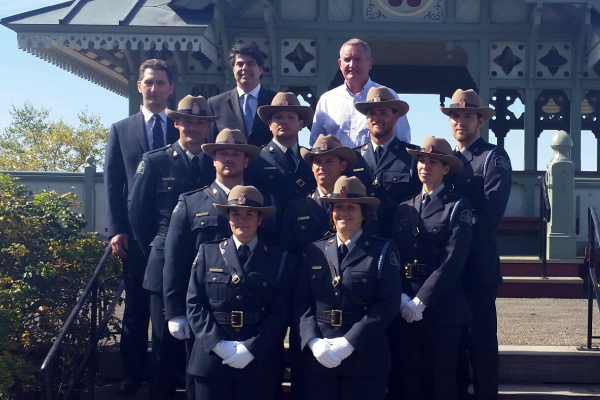
Elections took place today, on this fourth day of the UNE 2014 convention. Here are the results of those elections:

National Positions
National President Doug Marshall
National Executive Vice-President Kevin King
National Vice-President for Human Rights Geoff Ryan
Assistant National Vice-President for Human Rights Daniel Toutant
National Advisor for Parks Canada Eddie Kennedy


Alberta, N.W.T. and Nunavut
Regional Vice-President Dave Burchell
Assistant Regional Vice-President Jaison Van Tine
Assistant Regional Vice-President Angad Hundal
Regional Representative for Human Rights Genevieve Babineau
1st Alt. Regional Representative for Human Rights Chantal Favelle-Rubenstahl
2nd Alt. Regional Representative for Human Rights Meghraj Khadka
PSAC Delegate Jason Van Tine
PSAC Delegate Kate Hart
1st Alt. PSAC Delegate Stefan Jensen
2nd Alt. PSAC Delegate Angad Hundal


Atlantic
Regional Vice-President  Angela Decker
1st Assistant Regional Vice-President (NB-PEI)  Mike LeBlanc
2nd Assistant Regional Vice-President (NL)  Bill Bennett
3rd Assistant Regional Vice-President (NS)  Craig Cameron
Regional Representative for Human Rights  Annette Brown
1st Alt. Regional Representative for Human Rights Melinda Scott
2nd Alt. Regional Representative for Human Rights Anna Migas
PSAC Delegate Kate Hartigan
PSAC Delegate Matt Cook
1st Alt. PSAC Delegate Jeff Reid
2nd Alt. PSAC Delegate Eddie Kennedy
3rd Alt. PSAC Delegate Mike LeBlanc
4th Alt. PSAC Delegate Susan Evans


British Columbia and Yukon
Regional Vice-President  Jennifer Chieh Ho
Assistant Regional Vice-President  Brian Bakker
Assistant Regional Vice-President  Allan Combres
Regional Representative for Human Rights  Shirley Torres
1st Alt. Regional Representative for Human Rights Amit Deo
2nd Alt. Regional Representative for Human Rights Dylan Meryerhoffer
PSAC Delegate Andy Yung
PSAC Delegate Dylan Meyerhoffer
1st Alt. PSAC Delegate Amit Deo
2nd Alt. PSAC Delegate Allan Combres
3rd Alt. PSAC Delegate Céline Ahodékon


Manitoba
Regional Vice-President  Christopher Little-Gagné
Assistant Regional Vice-President  Martin Kaminski
Assistant Regional Vice-President  Melody Raabe
Regional Representative for Human Rights  Jacqueline Nanali
1st Alt. Regional Representative for Human Rights Loretta Moar
2nd Alt. Regional Representative for Human Rights Cheryl Dubree
PSAC Delegate Martin Kaminski
1st Alt. PSAC Delegate Melody Raabe


NCR-Separate Employers
Regional Vice-President Patrice Rémillard
Assistant Regional Vice-President André Miller
Assistant Regional Vice-President Jasmin Richer
Regional Representative for Human Rights Carl Laguerre
1st Alt. Regional Representative for Human Rights Evelyn Beckert
2nd Alt. Regional Representative for Human Rights Mathieu Laurin
PSAC Delegate Ghislain Roussel
PSAC Delegate Mylène Séguin
PSAC Delegate André Miller
PSAC Delegate Edward Bradbury
1st Alt. PSAC Delegate Gilbert Leduc
2nd Alt. PSAC Delegate Mélanie Drouin-Dion
3rd Alt. PSAC Delegate Jamie McDougall
4th Alt. PSAC Delegate Jasmin Richer
5th Alt. PSAC Delegate Evelyn Beckert


NCR-Treasury Board
Regional Vice-President  Richard Ballance
Assistant Regional Vice-President  Cindy D’Alessio
Assistant Regional Vice-President  Roman Laroche
Regional Representative for Human Rights  June Dale
1st Alt. Regional Representative for Human Rights Richard Lynn
2nd Alt. Regional Representative for Human Rights Karine Oluyole
PSAC Delegate Roman Laroche
PSAC Delegate Tim Warmington
PSAC Delegate Karine Oluyole
PSAC Delegate June Dale
PSAC Delegate Suzanne Arsenault
PSAC Delegate Cindy D’Alessio
PSAC Delegate Sandrine Oka
PSAC Delegate Hayley Millington
PSAC Delegate Suzanne Cadieux
PSAC Delegate Richard Lynn
1st Alt. PSAC Delegate Beverly Brown
2nd Alt. PSAC Delegate Sylvie Clément
3rd Alt. PSAC Delegate Nicole Dubé
4th Alt. PSAC Delegate Robert Gagnon
5th Alt. PSAC Delegate Andrew Gibson
6th Alt. PSAC Delegate Katherine Cyr
7th Alt. PSAC Delegate Julie Bordeleau
8th Alt. PSAC Delegate Victoria Murphy
9th Alt. PSAC Delegate François Deschênes
10th Alt. PSAC Delegate Nicole Cléroux


Ontario
Regional Vice-President  Mary Anne Walker
Assistant Regional Vice-President  Diane Levola
Assistant Regional Vice-President  Andrew Shaver
Assistant Regional Vice-President  Craig Reynolds
Regional Representative for Human Rights  Sandy Bello
1st Alt. Regional Representative for Human Rights Carrie Vasey
2nd Alt. Regional Representative for Human Rights Andria Meskauskas
PSAC Delegate Diane Levola
PSAC Delegate Andrew Shaver
PSAC Delegate Sandy Bello
1st Alt. PSAC Delegate Michael Freeman
2nd Alt. PSAC Delegate Tom Buckley
3rd Alt. PSAC Delegate Craig Reynolds


Outside Canada
Regional Vice-President  Karl Lafrenière
Assistant Regional Vice-President  Rose Touhey
Assistant Regional Vice-President  Heather Brooker
Regional Representative for Human Rights  Isabelle Beaudoin
1st Alt. Regional Representative for Human Rights Dianna Brown
2nd Alt. Regional Representative for Human Rights Paul Thomas
PSAC Delegate Heather Brooker
PSAC Delegate Rose Touhey
PSAC Delegate Isabelle Beaudoin
PSAC Delegate Gordon McAllister
PSAC Delegate Kenton Little
1st Alt. PSAC Delegate Stéphane Allard
2nd Alt. PSAC Delegate Paul Thomas
3rd Alt. PSAC Delegate Shahrzad Sedigh
4th Alt. PSAC Delegate Dianna Brown
5th Alt. PSAC Delegate Archie Campbell


Quebec
Regional Vice-President  Yvon Beaudoin
Assistant Regional Vice-President  Yann Boudreau
Assistant Regional Vice-President  Julie Dubois
Regional Representative for Human Rights  Keith Lemoine
1st Alt. Regional Representative for Human Rights Carole Maillet
2nd Alt. Regional Representative for Human Rights Nathalie Bouchard
PSAC Delegate Diane Labrecque
PSAC Delegate Yann Boudreau
1st Alt. PSAC Delegate Géraldine Fortin
2nd Alt. PSAC Delegate Nathalie Bouchard
3rd Alt. PSAC Delegate Julie Dubois
4th Alt. PSAC Delegate Colyn Tucker-Steele
5th Alt. PSAC Delegate Mélanie Laroche
6th Alt. PSAC Delegate Etienne Mathieu


Saskatchewan
Regional Vice-President  Omar Murray
Assistant Regional Vice-President  Gloria Pfeifer
Assistant Regional Vice-President  Janette Husak
Regional Representative for Human Rights Sandra Ahenakew
1st Alt. Regional Representative for Human Rights Pearl Yuzicappi
2nd Alt. Regional Representative for Human Rights Kate Johnson
PSAC Delegate Pearl Yuzicappi
1st Alt. PSAC Delegate Gloria Pfeifer
2nd Alt. PSAC Delegate Audrey Berlovan
3rd Alt. PSAC Delegate Bonnie Molson
3rd Alt. PSAC Delegate Melissa Brandt

Convention news you can use!

conv_news

Convention is well under way. Our members’ brains are overflowing with synaptic action from all the great debates we’ve had and rousing speeches we’ve heard.

You can download the newsletters by using the following links:

Edition 1 – August 12, 2014
Edition 2 – August 13, 2014
Edition 3 – August 14, 2014
Edition 4 – August 15, 2014

These newsletters are made possible by the tremendous work of UNE volunteers: Rudy Depakakibo, Safia Haji-Dayib, Jay Lamothe and Cate Watrous.

There are also tons more pictures on Flickr and great discussions happening on Twitter thanks to this hashtag: #UNE2014.

August 14: Multiculturalism Day at the UNE

multi2014

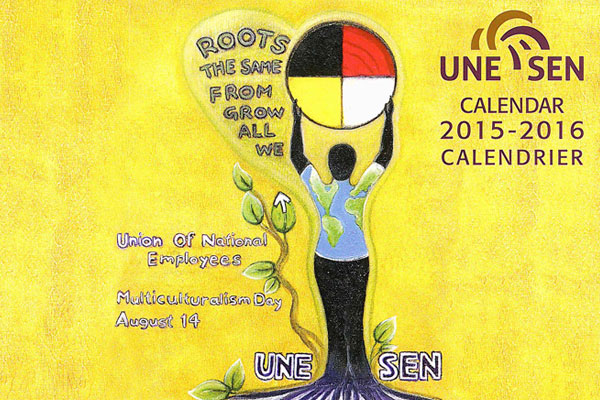
August 14 is Multiculturalism Day at the Union of National Employees. During our last convention, our members passed a resolution to celebrate our union’s diversity each year on August 14.

We hope you take the opportunity to find out more about the rich cultural mosaic in which we live. To help you promote the occasion, we’ve created a lovely poster for you to download, print and post in your office.


Tribal people under attack

WID_2014

This International Day of the World’s Indigenous Peoples, Survival International is calling attention to some of the tribes who fell victim to genocide. The international organization, which advocates on behalf of tribal people worldwide, fears history could repeat itself if urgent action isn’t taken to protect a particular tribe on the Brazilian-Peruvian border.

Early last month, Survival International learned that a formerly uncontacted tribe (a tribe that had no previous contact with industrialised societies) reached out to the Ashaninka, a neighbouring tribe in Brazil.

“This uncontacted tribe said that they left their home because their elders had been massacred by non‑Indians and that all their homes had been burned,” explained Ilana Nevins, spokesperson for Survival International. “There were so many people killed that they couldn’t bury them all – that those who couldn’t be buried had been picked at by vultures.”

The organization suspects that illegal loggers and cocaine traffickers are the likely culprits of this flagrant level of violence. Many of the area’s tribal people have already been pushed further into the forest as illegal logging and drug traffickers encroach on their land.

In addition to violence, isolated tribes that come into contact with people from industrialized societies are highly susceptible to introduced diseases. In the mid 1990’s, more than half of the Nahua people were wiped out following their first contact with loggers.

Seven tribal people who made contact last month were already showing signs of influenza, a disease to which they have no acquired immunity. FUNAI, the Brazilian government body charged with protecting tribal territories and their people, treated five young men and two young women for the disease.

With 70 uncontacted tribes within its borders and 14 million hectares of land (roughly two-and-a-half times the size of Nova Scotia), FUNAI has a daunting task – and not enough funds to do it. But Nevins says things have been improving.

“There are people – FUNAI staff – that care deeply that making sure these people and this land is protected,” said Nevins. “But that’s not enough; right now, there aren’t enough funds to make sure that all the uncontacted land is being monitored – that illegal loggers, miners and other people focused on resource extraction are kept out of this land.”

Survival International would like to see the Brazilian government allocate more funds to FUNAI. At present, they are calling on the government to urgently re-staff a government outpost that was overrun in 2011 by illegal loggers and drug traffickers.

The staff there was working to monitor and protect the land where the uncontacted tribe is believed to have resided.

Survival International is asking people to sign and send an email to the Brazilian and Peruvian governments, calling on them to monitor and protect these uncontacted tribes and their land.

In March of this year, the Peruvian and Brazilian governments signed an agreement to cooperate on cross-border monitoring and protection.

“So far this has not been sufficient to ensure that these people are protected,” concluded Nevins.

Members can find out more about Survival International at www.survivalinternational.org. You may also be interested in other articles we’ve written about tribal people, including: Rethink Your Vocab and last year’s article on oil exploration encroaching on the Matsés’ land, which is located within Peruvian borders.

Where to get convention news?

convnews


With convention fast approaching, this strikes us as a good time to share our game plan for reporting on convention proceedings.

As with all our conferences, we’ll be producing a daily newsletter. We’ve already recruited some amazing volunteers to help us produce four editions of The Review: the UNE’s official conference newsletter. This newsletter will be distributed daily to convention participants; it will also be published on our website to allow everyone else to find out the day’s highlights.

Look for electronic editions of The Review on Tuesday, Wednesday, Thursday and Friday mornings (by 10 a.m. Pacific time, 1 p.m. Eastern time).

Election results will be posted on our website on Thursday; they’ll also be featured in Friday morning’s edition of The Review.

For those who want more up-to-the-minute news, we encourage you to dip your toe into the Twittersphere. We plan on live-tweeting during convention; this means you can find out about the fate of resolutions, get key quotes from guest speakers, and receive election-day updates all in real time.

Remember: you don’t need a Twitter account to read our tweets. You can follow our twitter stream by clicking here or by clicking the Twitter link on our main page. You can follow the conversation by keeping an eye on #UNE2014.

If you’re really interested in keeping up with all our latest news, please like our Facebook page and sign up for our e-newsletter.


Liar liar, pants on fire (round 2!)

TONY_2E

Looks like Tony Clement’s pants are on fire once again!

Another one of Tony Clement’s lies bit the dust yesterday thanks to a report by the Parliamentary Budget Office. The report echoed what we’ve been saying all along: federal public service sick leave costs almost nothing.

The report revealed that most public servants aren’t replaced while on sick leave; that’s hardly a revelation to most of us, we know!

There are, of course, some departments that do backfill employees due to operational requirements. That said, the report contends that the cost of doing this would only be significant if it “exceeded $500 million government-wide or 10 per cent of a department’s budget.”

The department with the highest sick leave-related costs averaged 2.74% of overall department expenditures, with most core public service departments falling anywhere between 0.16% to 1.5%.

That’s a far cry from 10%!

What’s even more revealing is that Correctional Services Canada and Canadian Border Security Agency, the two departments where employees use the most sick leave, clearly have unique workplace hazards that could easily explain the higher occurrence.

The Parliamentary Budget Office also reiterated its findings from an earlier report; public servants use an average of 11.52 sick days per year; a number in line with the private sector’s 11.3 sick days per year.

You can find out more by consulting the following articles:

Civil servant sick leave costs minimal for taxpayers, report says – Globe and Mail
Public Servants’ sick days immaterial to Ottawa’s bottom line, report says – CBC


Are you on track for convention?

track_e

Can you believe it? Convention is just a month away!

If you’re planning on joining us for convention, you should make sure you’ve completed all the steps to be in attendance.

By now, our office should have received the following documents from you:   checklist1

You should have also taken a moment to register online:checklist2
Note: If you sent us paper copies of the documents above, you still need to register online!

Once you’ve received your delegate confirmation letter from us, it’s time to book your travel!checklist3
If you haven’t received your delegate confirmation letter, it’s because one of the four steps above hasn’t been completed.

If you’ve put a mental checkmark on all the boxes above: congrats! You’re on track for convention.

If you haven’t, please take a moment to complete the missing pieces; we don’t want you to miss out on all the fun convention has to offer!

Convention committee reports are in!

conv_reports


Dying to know what resolutions will be presented to you during convention? You needn’t wait any longer!

Most of your convention binder’s contents are now available online. Because we really like trees, we’d kindly ask you to refrain from printing any of these documents; we’ll take care of supplying you with a printed version in Victoria.

Looks like you’ve got a ton of bedtime reading to do between now and convention!

 Constitution and Bylaws Committee Report
 Finance Committee Report
 Definition of Financial Terms
 General Resolutions Committee Report

Don’t forget: you can find all our convention documents in the convention section of our website!


Learning to heal

learningtoheal

Last month, Ruby Langan organized a writing workshop focused on aboriginal awareness and healing. As UNE’s national equity representative for Aboriginal Peoples, Langan said the workshops’ participants had a very diverse range of interests.

“My intention was to get people writing and increase awareness of aboriginal human rights,” she said. “I believe that the writing process is a good way to start healing, which is a very important part of what I’m trying to accomplish.”

The workshop primarily attracted members of the aboriginal community around Vancouver. Langan said that many people are reluctant to begin writing. Participants were provided a safe, welcoming, encouraging environment and constructive feedback.

Residential schools and the foster care system have done untold damage to the links between First Nations Peoples and their culture.

“Cultural ties have been broken; people are just now trying to re-establish them,” she added.

Other topics discussed were individual healing journeys, drinkable water, human rights, marriage in traditional aboriginal societies, and environmental protection.

“I was amazed that we could have such a diverse range of interests and expertise in the workshop participants.”

“Many of us could benefit from healing,” concluded Langan. “I am on a healing journey. I am on a learning journey. Aren’t we all?”

“The relationship between Canada and First Nations is ever-changing. We can bring together learners and teachers and empower our members – aboriginal and non-aboriginal.”

Around the same time, the PSAC regional office in Quebec also provided a two-day training session on aboriginal issues. Julie Dubois, an assistant regional vice-president in Quebec, couldn’t wait to participate.

“As a young woman of aboriginal origin, I have a tremendous drive to learn more about the realities of Aboriginal Peoples in Canada,” explained Dubois. “It’s important to me to be able to debunk and challenge the myths surrounding aboriginal people.”

Dubois pointed out that most people know very little about aboriginal communities, other than the disinformation that takes place in the media.

Magali Picard, regional executive vice-president for the PSAC’s Quebec region, took the opportunity to deliver a speech that blew away the room.

“It’s as if her words came out as flaming arrows – she has an energy that is completely hypnotising and a charisma that could capsize any enemy,” declared Dubois.

A subject that frequently made its appearance was the Idle No More movement – and how allies can support its cause. Participants were even treated to a video that put the spotlight on the co-founders of the movement’s Quebec branch.

Another noteworthy moment was a heartfelt testimonial by Viviane Michel, who heads Quebec Native Women Inc. She touched on a host of challenges that aboriginal women grapple with, including the lack of resources, difficult financial situations, single mothers and the differences in language, among others.

Another important topic was the troubling number of missing and murdered aboriginal women. Michel also took the opportunity to mention that an equally troubling number of aboriginal men are missing. VICE recently reported that Six Nations Journalist Jen MtPleasant has compiled a database of over 600 missing or murdered aboriginal men in Canada.

The number of missing and murdered native women is estimated to be anywhere from 600 to 4,000; the range is indicative of a systematic problem when it comes to law enforcement collecting racial data.

In the end, Dubois said she left the training with new convictions with respect to aboriginal solidarity. Eager to share her experience, she wrote a two-page report that she intends to share with her region.

“While I’ve satisfied my thirst for knowledge, I can tell you that I still have a really strong desire to learn more – I can feel it in my veins!


Canadian Multiculturalism Day – June 27

CNDMULTI

By Amit Deo

Early 1980s: I’m at my father’s side in a large superstore’s pharmacy. We have just come from the emergency room. In the car, my mother is running an alarmingly high fever, awaiting the prescription to pull her back from acute danger. Frustrated and rather demandingly, my father asks the pharmacist who made an error in preparing my mother’s prescription to quickly remake the batch. The man in line behind us grows impatient. Assuming the mistake was ours and not realizing the urgency in this, he starts berating my father.

“Hurry the fuck up, you fucking Paki!”

Unbeknownst to him, my father doesn’t back down from confrontation easily, or rather, at all. This conversation is then, as they say, “taken outside”. In the parking lot, my father and this man verbally collide. The man screams a stream of obscenities and other classic slanders.

“You don’t even belong here. Go back to your own fucking country!”

My father, at this point, is basically looking for an opening to use his fists rather than his words. My poor mother, leaning out of the car window, is barely lucid and sobbing – but she musters the energy to tell my father to get back into the car.

As an eight year old boy at the time, I was standing on the curb, nervous and confused, crying my eyes out. Innocently though, as an undercurrent of thought, wondered if the word “Paki” had something to do with Pac Man – which I loved – but simply out of context, figured it did not.

Fast-forward to 2014: I’m at a crowded Thai restaurant with friends; the place is filled with people from all ethnic backgrounds. I can hear the waitress taking the order of the table next to us. Everyone at the table is an ethnic minority. The server, racially visible herself, finishes her task and leaves. The table then starts poking fun at the server; they are being very judgemental and critical. They mock her accent and her ethnicity. They don’t hesitate to make many negative assumptions about a woman they have never met before.

The first example I shared with you is a rather typical experience that I’m sure many racially visible people have faced; being criticized by another who’s not part of the minority. This is, and was, not uncommon, especially in years past and in rural communities. In my second example, we have different ethnic minority groups, one being critical of the other. Both groups are equally Canadian; both, I’m sure, experienced similar struggles in this country and yearn for a better a life.

Canada embraced a multiculturalism policy in 1971; it was a huge victory in the movement towards equality. Yet, as American philosopher John Dewey once said, “Arriving at one goal is the starting point to another”.

Many of us may see ourselves as equal, yet choose to not view others as equal to us. Canadians may have a hard time defining our national identity, but at the core, we are just that: Canadians.

Whether our origins are found in France, Poland, India or Japan, we ultimately found our way here for the betterment of ourselves, our families and our future generations. That is what we have in common, and what we know can be achieved in our country. Retaining our mother cultures is difficult, but vitally important. Equally important, however, is accepting and adopting the culture and identity of the country we live in. Being a citizen of this country gives us equal rights, but also demands equal responsibility.

Multiculturalism in Canada does not just mean accepting other cultures, races, and religions – it means accepting each of them as equal to our own. Multiculturalism isn’t just about sharing our foods and traditions with each other. It’s about standing together for equality. Canada is not a country that yields to intolerance, yet injustices still occur and many still choose to ignore that they do.

However subtle or blatant, discrimination is a common occurrence. We read headlines on a daily basis that  report on the state of countries where similar ethnic groups are at war with each other, intolerant of each other; Ukraine, Sudan, Korea, Libya. As diverse Canadians, we have to set the standard. We are no better if we cannot accept each other as one.

Our differences are what make us stronger.

Our acceptance of each other should be the model to be mirrored by other countries.

Through acceptance, not judgement, we achieve wholeness. Multiculturalism is equality.

Diversity is continually rising in Canada. We are at a verge of either being a country that treats one another with respect and dignity, or one that keeps ourselves guarded with our differences at arm’s length: pockets of groups not willing to share or let each other in. We should feel like we can walk into any place in this country. Whether that be the newest trendy steak house, or the little hole in the wall Chinese noodle restaurant.

We should not feel judged solely based on how we look. We may not have to agree on everything, but we have to accept and respect one another. Wouldn’t you agree? Well, maybe we can discuss this further over some dim sum. Join me?

Amit Deo is the alternate to the UNE’s national equity representative for racially visible people. If you’d like to take him up on the dim sum, you’ll have to meet him in Coquitlam, British Columbia where he is also the local president of composite Local 20088.

[Editor’s note: There are many schools of thought when it comes to including profanity in articles. The Canadian Press Stylebook points out that “profanity that is used for its own sake does not enlighten a reader” – and we absolutely agree. However, it also states that there are exceptions: “a profanity might be essential to an accurate understanding of the facts or emotions that are driving a story.” In this case, we chose to include the profanity to give readers an accurate portrayal of the vitriol that equity-seeking groups often face.]