One is too many: No one should die on the job

Who’s counting?

April 28 is the National Day of Mourning when we remember those who have lost their lives or suffered injury and illness because of their work.

Every day there are opportunities to prevent workplace injury and death, but we can’t do it without the data we need to drive our decision-making.

In Canada, we collect statistics on many things including the weather, but we fail to accurately record the number of individuals who have died as a result of their work. Because of this, we do not learn the lessons that would allow us to prevent future tragedies.

Apart from data compiled by Workers’ Compensation on workplace injuries and fatalities, no Canadian department or agency is actually counting occupational fatalities and injuries. The widely quoted 951 fatalities in the 2017 statistics (the most recent year available) from the Association of Workers’ Compensation Board of Canada (AWCBC) should not be used as the sole benchmark for work-related fatalities or injuries. The AWCBC figures only account for approved compensation claims, not the actual total of injuries and fatalities that occurred in any given year. Recent Canadian research demonstrates that work-related fatalities could be as much as 10 to 13 times higher than official data indicates.

This lack of reporting means thousands of injuries and deaths are missing from occupational health and safety statistics. These include workers exempt from coverage like the self-employed, banking employees, domestic workers, many farmers and agricultural workers, commuting fatalities, stress-induced suicides, unapproved occupational diseases, employees of private clubs, and temporary or undocumented workers.

In addition, in the federal sector, when a person dies due to a particular hazard, the compensation board does not provide the root cause analysis to employers. The Coroner does not give employers a notice of death, nor is the root cause of the injury or fatality necessarily considered in the required hazard prevention program – as though every fatality is “an accident.”

Let’s push to make 2019 the year that the government of Canada begins to accurately document and use evidence-based recording to prevent workplace injuries and save lives. One is too many – no one should die on the job.

Source: PSAC

2019 Federal Budget


Complementary to the PSAC analysis, UNE went through the 2019 federal budget. Here is a summary of the measures that matter to you as a UNE member.

Phoenix and NextGen 

“To continue progress on stabilizing the current pay system, Budget 2019 provides an additional $21.7 million in 2018–19 to address urgent pay administration pressures (partially sourced from existing departmental funds), and proposes to invest an additional $523.3 million over five years, starting in 2019–20, to ensure that adequate resources are dedicated to addressing payroll errors.”

PSAC and UNE welcome these additional funding measures to address the Phoenix fiasco, but as pointed out by PSAC, “they fall significantly short of what is required to end the pay nightmares of Canada’s federal public service workers.”

We are happy that the Canadian Revenue Agency (CRA) will be receiving an additional $9.2 million in 2019–2020 for any telephone enquiries.

As for NextGen, there is not much detail in this budget plan other than public sector unions will be consulted during the review process.

Gender Equality

The gender-based analysis plus (GBA+) is work in progress and Budget 2019 allocates $1.5 million to the Treasury Board Secretariat (TBS) over five years. TBS will work with other departments in the collection of GBA+ data.
The new Department for Women and Gender Equality will receive $160 million over a five-year period. This important investment will allow strengthen its mandate.

Extra Funding for the LGBTQ2+ Secretariat

$3.6 million is being allocated to the LGBTQ2+ Secretariat over three years. The Secretariat collaborates with stakeholders to inform the “Government’s activities on issues related to sexual orientation, gender identity and gender expression.”

Support for Racialized Workers

PSAC and UNE “welcome the investment of $45 million over three years to support a new Anti-Racism Strategy along with an Anti-Racism Secretariat. We hope the government will integrate PSAC’s recommendations in making a stronger commitment to employment equity, accessible and transparent staffing processes and reconciliation with the Indigenous community. The $25 million over five years for projects and capital assistance to celebrate, share knowledge, and build capacity in Black Canadian communities is long awaited funding.”

Parks Canada

We can read at page 300 that $19 million will be allocated to fund capital projects in national parks, national marine conservation areas and national historic sites. That does not address major concerns raised in a report commissioned by Parks Canada. The agency has “deferred up to $9.5 billion in badly needed work – and ought to spend up to $3.3 billion on top of that to cope with the threat of climate change.” “When reviewed, 24 per cent of the asset[s] were assessed as being in good condition, 36 per cent in fair condition, and 40 per cent in poor or very poor condition,” says the report. In other words, this budget does not address a systemic situation that Parks Canada has been facing for years.

Lack of Measures Precarious Workers

This budget lacks measures to address the issue of using temporary agencies and casual contracts, and to protect the most vulnerable workers through a federal workers’ compensation plan.

Social Security Tribunal

Following the recommendations of a 2017 independent review of the Social Security Tribunal of Canada and comments expressed by Canadians trough consultations, the government is trying to fix a situation created by the Harper Government. “To make the recourse process for EI, CPP, and OAS easier to navigate and more responsive to the needs of Canadians, Budget 2019 proposes to invest $253.8 million over five years, starting in 2019–20, with $56.7 million per year ongoing.”

Social Development Minister Duclos has recently declared that “the government will bring back the three-person hearings for the first layer of benefit appeals — in a body separate from the tribunal — and retain the tribunal’s single arbitrator for the second, and final, layer.” UNE welcomes this funding.

Federal Public Service Dental Plan Coverage

These improvements for the dental coverage follow an important PSAC victory. After lengthy negotiations and an arbitration process, PSAC won the arbitral decision for the Public Service Dental Care Plan late last year.

Making Workplaces more inclusive

The government has pledged $12 million over three years to support employment for persons with intellectual disabilities and Autism Spectrum Disorder (ASD).

As for federal workplaces, “[t]he [g]overnment has committed to hiring at least 5,000 people with disabilities over the next five years.” In order to reach that goal, it will spend $13.7 million over that period of time.

Staffing at Immigration, Refugees and Citizenship Canada

We welcome investments in staffing at Immigration, Refugees and Citizenship Canada (IRCC).

Indigenous Communities across Canada

Budget 2019 includes 24 measures for Indigenous peoples, totaling approximately $4.7 billion. Federal measures towards Indigenous Peoples include:

  • $127 million to create the National Council for Reconciliation
  • $1.2 billion over three years for Jordan’s Principle
  • $739 million over five years for water
  • $333.7 million over five years + $115.7 million ongoing to implement the Indigenous Languages Act
  • $327.7 million over five years for post-secondary education
  • Loan forgiveness and reimbursement for comprehensive claims and research for specific claims

As pointed out in the PSAC article, there is “no dedicated funding for Indigenous women’s organizations, to support and carry out the necessary work that will come out of the recommendations of the [National Inquiry into Missing and Murdered Indigenous Women and Girls]. This is a glaring gap.”

Canada’s North

Budget 2019 focuses on four areas:

  • People: options for post-secondary education are expanded; Northern Isolated Community Initiatives Fund established over five years; measures to improve people’s health and well-being
  • Economic Development: measures in resource development, innovation and business growth
  • Infrastructure: one major announcement is restoring rail service to Churchill, MB; more funding for more infrastructure, cleaner energy and high-speed Internet access
  • Science and Environment: more support provided towards science and research, and conserving the Arctic environment

Ontario Health Care

Rally organized by the Ontario Health Coalition (OHC)

For more information: https://www.ontariohealthcoalition.ca/index.php/safeguard-health/

What is “Ford Nation” doing to the Public Health Care Services?

A massive bill, Bill 74, was recently tabled by the Ford Government to reorganize health care services in Ontario:

Not a Single New Service or Improvement to Care
We have excellent health care in that province. We just don’t have enough of it. Yet Doug Ford’s new health care omnibus bill does not open a single new health care service. Not a single surgery to help tackle wait lists. Not one new nursing home space. No more health professionals, vital support staff, nurses or doctors.

Ontario funds health care at the lowest rate in Canada. We have a long way to go even just to reach the average of the rest of the country. We are asking the Doug Ford government to refocus attention on actually expanding and improving access to care. No to privatization and mega-mergers.

New Powers to Force Mergers and Privatization

The new approach of this Conservative Government is to centralize 20 existing agencies into one big one called the “Super Agency”. It will create many problems because of the disparate mandates, histories, levels of effectiveness, and cultures of the existing ones that are well implemented in their communities.

Restructuring powers are defined in the legislation as not only service coordination but also mergers, amalgamations, transfers of all or part of a service, closures of a service, and entire closures of local health services. In other words, this bill is a gift to giant CEOs and large chain corporations to take over health services in Ontario.

New Bureaucracy but No Public Oversight

At the end of the years of mergers and takeovers and partnerships and so on, the Minister of Health and Long-Term Care envisions 30 – 50 giant health care conglomerates running virtually all services for up to 15 million Ontarians. Each conglomerate will need a new tier of administration to run the relationship between its various parts of the new health care structure. With this new governance approach, it will mean that overtime public oversight will disappear, and any decision made will be business driven, NOT made in the interest of the public.

No Public Consultation: Virtually All Community Control Taken Away

Virtually all the democratic protections that were won in previous legislations have been stripped in this bill. There are NO open board meetings. NO public right to access restructuring documents. NO appeals.

Upheaval for Care Workers

Another half decade or more of upheaval and takeovers will be devastating to a workforce that has stretched itself for decades to do ever more.
We urge the Ford government to hit “pause”, to engage in proper public consultation and to make a new priority of actually improving access to public health care services for Ontarians.

Source: https://www.ontariohealthcoalition.ca/index.php/briefing-note-doug-fords-omnibus-health-bill-bill-74/


Regional Seminar – Saskatchewan and Manitoba

The Manitoba and Saskatchewan Regional Teams invite you to participate in the Regional Seminar scheduled to take place at the Delta Regina Hotel on May 3 – 5, 2019.

This event will offer presentations and workshop training that will give you the knowledge and confidence to help your members. It’s also a great place to meet active members just like you and forge long-lasting friendships.

For a sneak-peek at what else we have in store for you, check out the seminar agenda.

The Union of National Employees will fund the following delegates per local:

  • A Local President or designate should be one of the delegates;
  • A member who has not previously attended a seminar should be given priority;
  • Locals will elect a youth delegate to attend the regional seminar (age 35 or younger as of December 31, 2020).

Locals are required to encourage the participation of equity members. Locals may send additional members at their own expense.

For information on travel, accommodation, accessibility and assistance for persons with disabilities, please consult the cheat sheet.

You must register by Friday, April 19, 2019. Unfortunately, we will not consider late registrations.

Should you have any questions about the Seminar please contact suzanne.boucher@une-sen.org.

Delegates to the Regional Seminar should arrive for Registration at 7:00p.m. Friday evening, May 3, 2019. Accommodations will be arranged for delegates to spend two nights at the Delta Regina Hotel for the Friday, and Saturday night of the Seminar as activities are scheduled to take place into the evenings. The Seminar ends on Sunday, May 5 at 1:00p.m.

Click here to register online.

Local Presidents’ Conference – That’s a Wrap

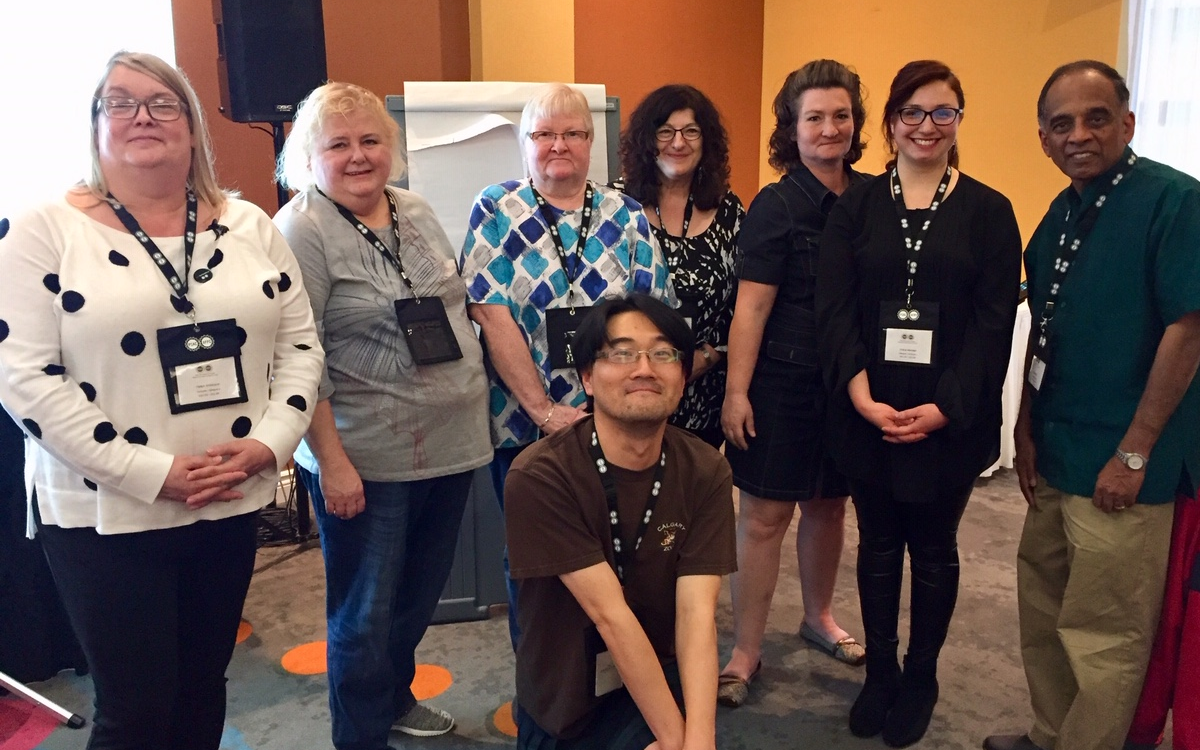
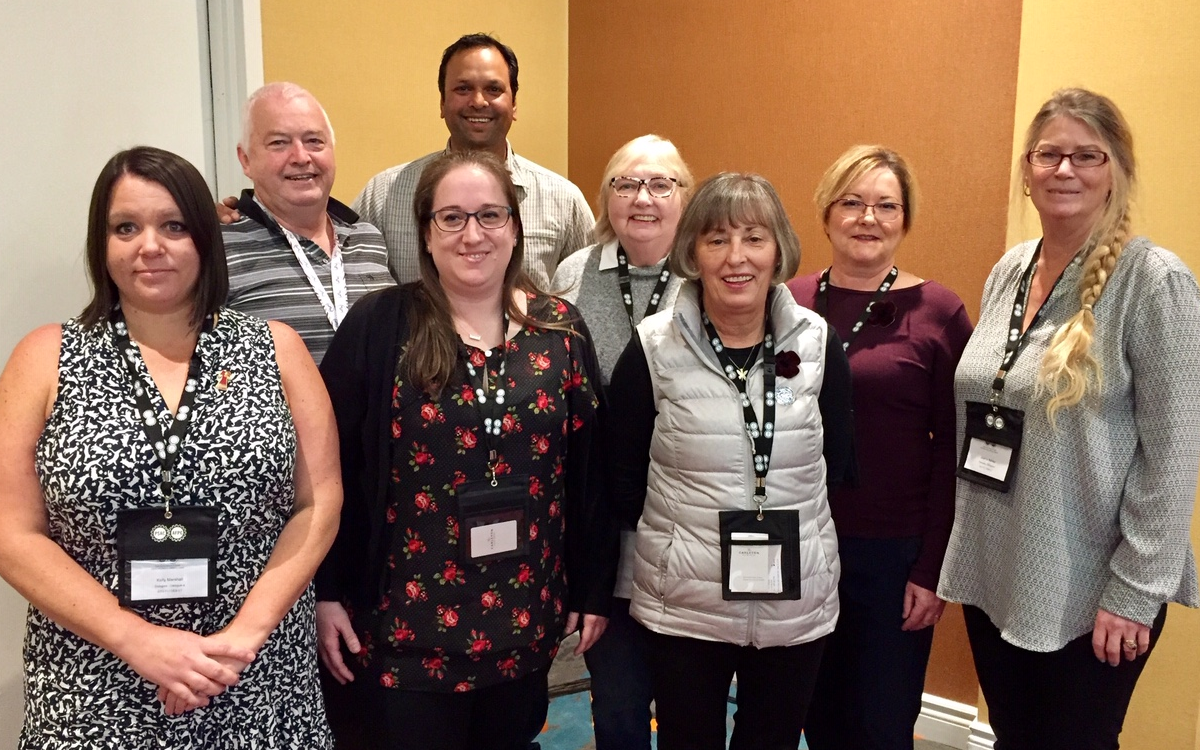
The UNE would like to thank all 180 members who came out for this years’ UNE Local Presidents’ Conference.

Over the weekend, participants heard from an impressive lineup of guest speakers, engaged in panel discussions and gathered together in employer and regional caucuses.

On Friday, Maple Creek Saskatchewan’s Omar Murray gave a powerful review of the Winnipeg General Strike of 1919. CLC’s Larry Rousseau then fired the group up even more before they headed out in bus loads to the Prime Minister’s Office with messages of support for our bargaining teams, dismay at the Phoenix debacle and solidarity with Indigenous Canadians cheering on Bill C-262.

Upon return from the rally, the crowd heard from NDP Member of Parliament, Ms. Ruth Ellen Brosseau who spoke of her rise in politics and how she challenges the current Liberal government. Then it was off to workshops within employer groups before ending a busy first full day.

Saturday kicked off with regional caucuses and then a presentation by Mr. Alexandre St-Jean from the Office of the Ombudsman, Ethics and Conflict Resolution at Treasury Board. A panel discussion on Duty to Accommodate with UNE National Labour Relations Officers then capped off the morning.

In the afternoon, participants worked in smaller groups to learn about challenges, experiences and tools available to them as Local Presidents.

Sunday morning, attendees heard from the five National Equity Representatives for Human Rights on their personal experiences and the importance of inclusion at the local, regional and national levels.

UNE National President Kevin King closed out the conference.

Resources from the Conference are available on the UNE website at www.une-sen.org/events/conferences.

The component now turns its event focus to a series of Regional Seminars and the upcoming Women’s Conference scheduled for September 10-12, 2019.


Resources:

Winnipeg General Strike CBC Documentary (English only)
https://youtu.be/V1_oKcXn8vs

E-Petition for Parks Canada Historical Artifacts – https://petitions.ourcommons.ca/en/Petition/Details?Petition=e-2048

Ms. Ruth Ellen Brosseau,  MP for Berthier-Maskinongé (Quebec)
https://www.ourcommons.ca/Parliamentarians/en/members/Ruth-Ellen-Brosseau(71357)

Larry Rousseau, Executive Vice-President, CLC
http://canadianlabour.ca/about-clc/our-officers/larry-rousseau-executive-vice-president

Photos from the Conference are available on the UNE Facebook page:
https://www.facebook.com/Union.NE.Syndicat.EN/

And Instagram:
https://www.instagram.com/une.sen/

Racial Discrimination: a Deadly Poison

By Ralph Daguilh

Hello fellow activists!

March 21 is the International Day for the Elimination of Racial Discrimination. These past few days, I could not help but think about what March 21 means to racialized people. I thought about the xenophobic comments and policies of the President of USA – I reflected on the ways African French soccer players were discriminated and undervalued during last year’s World Cup. I even thought about the backlash that Naomi Osaka suffered when she won against Serena Williams – Anyway, my list is endless….

Racial discrimination is very much alive in our communities and workplaces. I am frustrated that racial discrimination is very subtle and can’t always be proven. The victim suffers in silence! Racial discrimination destroys the victim’s wellbeing and empowers the perpetrator – it is a silent killer and can have long lasting impacts on the victim and entourage!

In 2014, I witnessed with agony and tears my dear friend, John, a racialized person, experiencing racial discrimination. He was well trained to do the job shortly after he started working in his department. John successfully competed for a position; therefore, he should have gotten the job. Surprisingly, it never happened. The position was given to somebody else and John was left with no true explanation! Our local got involved with no success because management had already made their decision. John filed a grievance but lost because it was said “there is no evidence to prove that he was racially discriminated against”. I am still puzzled until today! Did my friend not get the position because of his skin colour? his accent? Or his religion? Even though the case happened a while ago, I still think of the emotional impacts the whole situation had on John, his family and friends. John must work two jobs to support his family. Therefore, not only has he less time to spent with his family, but he also must share his energy and skills between two Jobs.

It hurts a lot to be discriminated against – I am sure my friend John is not the only one to experience that.

The worst part is the victims of discrimination still have to find the courage and the energy, 5 days a week, to smile at their coworkers, and continue to provide the highest possible quality of service.

Racial discrimination is a poison: it diminishes individuals, perpetuates inequality, feeds anger, hatred, bitterness and violence. It can also lead to all kind of sickness and mental illness.

For my friend, after 5 years of patiently waiting for an opportunity to arise in his department, he decided to create his own. Slowly but surely, he took online courses to better himself and his education. Today he has his degree and more!

However, this is not the best way of dealing with racial discrimination, my friend chose that way because he has a very young family to feed and a mortgage to pay. When face with racial discrimination, stay focused, gather strength from your family, friends and allies and fight back!

I know, together, we can do it! The road to win a fight against racial discrimination is not an easy one. It is like climbing a tall mountain. The top seems unreachable. However, never give up, never give in and never stay silent!

Survey shows that racialized people are hired for entry level positions despite their qualifications and education; 80% of them remain at that entry level until they retire. They are underused. Racialized members represent numbers or quota to be filled by the employer.

My friends, racial discrimination will not disappear overnight. In my opinion, the International Day for the Elimination of Racial Discrimination should be an every day talk. The fight against racism and all forms of discrimination is a mainstay of peace and social cohesion, especially in our increasingly diverse communities and workplaces. Let’s learn to live and work together!

Ralph Daguilh
Alternate to the UNE National Equity Representative for Racially Visible People

Sources:

http://www.un.org/en/events/racialdiscriminationday/background.shtml

https://gryphlife.uoguelph.ca/event/87491

https://unesdoc.unesco.org/ark:/48223/pf0000247565_eng

International Women’s Day, March 8 – #BalanceforBetter

March 8 is International Women’s Day. This year’s theme is #BalanceforBetter, promoting a more gender-balanced world, where women’s actions and accomplishments are valued and recognized.

Canada is far from being from a gender-balanced society. However, there have been a few improvements for the past few years. In the federal public sector, the current government has put a large emphasis on gender equality. Part of the new Department for Women and Gender Equality’s mandate, whose workers are UNE members, is the “government-wide implementation of Gender-based Analysis Plus (GBA+)”. It is going to take years before the various federal departments fully adopt that public policy approach and before we can observe the impact of GBA+.

A lot of work remains to be done at the community level as well, where women can thrive both economically and in leadership positions. A recent report by the Canadian Centre for Policy Alternatives (CCPA) focuses on gender gaps in Canada’s 26 most populated cities. Based on four criteria, “economic security”, “education”, “health”, “leadership” and “security”, they ranked the cities where a lot of UNE members live and work. The top 3 cities where the gender gap is the lowest are:

1. Kingston, ON
2. St. John’s, NL
3. Victoria, BC

The Labour movement also needs to reflect on the reality of a persistent gender gap in leadership roles. As part of promoting leadership roles for women within our Union, UNE delegates voted on an important resolution at the 2017 Triennial Convention. The first UNE Women’s Conference will be organized in the fall of 2019. UNE female activists will gather to share ideas and experiences, and learn from each other to develop Union leadership skills.

Together, in our roles as Union activists, UNE members continue to contribute to building inclusive communities and are promoting gender equality.

There are many Labour events on March 8. Take part in an International Women’s Day event in your community!

Phoenix: PSAC escalates pressure on government with buildings shutdown

This morning, over 500 PSAC members rallied and blocked entry into two major federal government buildings in Ottawa as they expressed their mounting frustrations with Phoenix and urged the Trudeau government for more action.

“We have told this government that if they do not make more progress in paying our members correctly, and compensate them for the massive impacts of this disaster, that we would escalate our actions. That’s why we’re here today.” said PSAC President Chris Aylward.

“Federal Public Service workers have been showing up to work every day, delivering the services Canadians rely on, despite the mess Phoenix has created in their lives. Our members have been paying for the government’s mistakes for years. It’s time for the government to start paying them back.”

The union is calling on the government to remedy the situation by:

  • Paying damages to all public service workers for the great financial and emotional hardship they have endured
  • Providing the additional staffing and training needed to:
  • assist members at the Client Contact Centre and the Public Service Pay Centre;
  • reduce Phoenix cases by ensuring HR data is entered on time;
  • eliminate the backlog of Phoenix cases, including implementing collective agreements and delivering retroactive pay
  • Delivering a clear and accountable timeline to stabilize Phoenix, eliminate the backlog, and transition to a new pay system

Damning figures from the recent Public Service Employee Survey provided overwhelming support for the union’s demands.

“To add insult to injury, while our members continue to wait to be paid correct, this government has also delayed delivering a fair deal for over 100,000 PSAC members at the bargaining table. We won’t allow this government to keep taking our members for granted.”

Source: PSAC

SSO victory: Arbitration panel awards 4% market adjustment

On 15 February 2019, an Arbitration Board issued its final, binding decision on outstanding issues pertaining to negotiations for the Regional Offices (RO) and Field Interviewers (FI) bargaining units of Statistical Survey Operations (SSO).

Two important gains were awarded by the Board:

  1. New language in Article 2 (Definitions) requiring the employer to provide, in a letter to employees, an explanation for changes to an employee’s Average Work Week (AWW); and
  2. In addition to the 1.25% annual economic increase for the four year collective agreement, there is now a 4% market adjustment applicable to all rates of pay, effective December 1, 2016, and applied prior to the 1.25% economic increase for that year.

The Board granted the employer 120 days—i.e., until June 16—to implement the retroactive pay and 4% market adjustment for all members of both bargaining units.

The arbitration award lists all items settled by the parties prior to the hearing under Annex A. The award states that “all items, whether agreed to by the parties or awarded by the board, are effective the date of the award unless specified otherwise.” In other words, the terms of new collective agreement are in full effect as of February 15, 2019.

PSAC is now working with the employer to proofread all changes in the new agreement prior to signing and distributing it to members.

Download the arbitration decision ⬇

Background

After two years of negotiations with SSO, the union and employer reached impasse and filed for arbitration. On January 29-30, 2019, an arbitration hearing was held in Ottawa and on February 15, 2019, the Board issued its award.

As this new agreement is retroactive to a four year period that ended on November 30, 2018, PSAC is already in the process of initiating a new round of bargaining. More information on this will be provided soon; please sign up for SSO bargaining updates here.

Source: PSAC 

We Don’t Say…

The UNE Human Rights Committee is proud to launch its series of “We Don’t Say” photos with messages from members highlighting language that marginalizes the five UNE equity groups: LGBTQ2+ people, women, persons with disabilities, aboriginal peoples and racialized persons. The committee was inspired by the Duke University students’ “You Don’t Say” campaign that gained popularity on Twitter. Since its debut in 2015, other university student associations have also jumped on board.

Kate Hart, UNE Assistant National Vice-President for Human Rights, brought the project to the attention of the UNE Human Rights Committee. “This campaign is great for UNE members because it is so inclusive,” said Hart. “Our proud union members have taken the opportunity to be featured in this project and we were pleasantly surprised by how many people wanted to participate. We also learned a great deal about each other because many voiced issues that were dear to them – issues such as suicide, racism and mental health. There are words related to these that feed stigmas or offend us or hurt us emotionally. Our hope is that the photos and their messages will help us educate one another.”

The photos will be posted on social media platforms including Instagram, Twitter and Facebook every month. We encourage you to share them with your family, friends and colleagues.

For more information, contact the UNE Human Rights Committee.